

Yes, star ratings affect search rank, but only in local search results, not standard organic web rankings. Google's own guidance names review count and score as part of "prominence," one of three factors that decide who shows up in the Local Pack and Google Maps. Here's what actually matters:
- Where it counts most: Local Pack, Maps, and Business Profile listings, not general blue-link organic results.
- Fastest wins: Complete your Google Business Profile, then focus on steady, recent reviews over chasing a perfect score.
- Realistic timeline: Expect measurable local-pack movement within 1 to 3 months, not overnight.
Start with a Business Profile audit before you touch anything else.
Key Takeaways
Star ratings directly influence local search rank through Google's prominence signal, while organic web rankings respond only to the indirect effects of higher click-through rates.
| Point | Details |
|---|---|
| Local vs. organic split | Ratings affect Local Pack and Maps ranking directly; blue-link organic search treats them as a CTR factor only. |
| Volume often beats score | Growing from 50 to 200 reviews typically moves the local pack more than a modest score increase alone. |
| 90-day movement is realistic | Adding 20+ recent reviews correlated with a 4.2-position average local-pack jump within 90 days in one study. |
| Policy compliance protects gains | Buying reviews or gating unhappy customers risks filtering penalties that erase ranking progress. |
| Thehivewindsor adds a second channel | Its reputation-based listing model rewards community engagement in Windsor-Essex without ad spend competition. |
Table of Contents
- How Star Ratings Affect Search Rank in Local vs. Organic Results
- Which Review Signals Actually Move the Needle?
- Does a Higher Rating Actually Bring More Customers?
- How to Get More Reviews Without Breaking Google's Rules
- Where Star Ratings Actually Show Up on Google
- What to Measure and When to Expect Results
- How a Local Discovery Platform Changes the Visibility Math
- What Small Business Owners Should Prioritize First
- Turn Your Reviews Into Local Discovery, Not Just Star Ratings
- Frequently Asked Questions
- Sources
How Star Ratings Affect Search Rank in Local vs. Organic Results
Google splits search into two systems that treat reviews completely differently, and mixing them up wastes a lot of small-business marketing effort.
For local results, Google's own help documentation states that rankings come from relevance, distance, and prominence, and that prominence "includes factors like the number of reviews and rating." That's about as direct a confirmation as you'll get from Google on anything ranking-related.
Local results are based on relevance, distance, and prominence. Prominence includes factors like the number of reviews a business has received and its average review score.
For standard organic web search, the picture changes. As Search Engine Journal explains, Google does not use star ratings as a direct ranking factor for general blue-link results. John Mueller has said the same thing publicly on multiple occasions: reviews influence how people click, not how pages get sorted algorithmically outside the local ecosystem.
| Search type | Do star ratings directly affect rank? | What actually moves visibility |
|---|---|---|
| Local Pack / Maps | Yes | Review count, average score, and prominence signals |
| Business Profile | Yes | Review volume, recency, and completeness of listing |
| Organic web (blue links) | No | Content relevance, backlinks, technical SEO |
Pro Tip: If you only have bandwidth for one thing this quarter, put it into your Google Business Profile and a steady drip of reviews. That's where the ranking mechanism actually lives for a local storefront or service business.
The indirect effect matters too. Even in organic search, a visible star rating in a rich snippet can lift click-through rate, and Google's systems do track engagement signals. A rating won't move your blue-link position directly, but a business that gets clicked more and browsed longer sends behavioral signals that support broader visibility over time.
Which Review Signals Actually Move the Needle?
Google and independent researchers point to the same handful of review attributes, and they don't all carry equal weight.
- Average score: The headline number, weighted most in trust and prominence calculations.
- Review volume: More reviews generally signal more prominence, especially relative to nearby competitors.
- Recency: Reviews from the last 90 days tend to matter more than a pile of five-year-old feedback.
- Review text and keywords: Mentions of services, neighborhoods, or products can reinforce topical relevance.
- Reviewer credibility: Google weighs some reviewer accounts more heavily based on activity history and Local Guide status.
- Owner response activity: Businesses that reply to reviews show engagement that correlates with sustained visibility.
Consider two scenarios. A business raises its average rating from 4.2 to 4.5, a real but modest bump. Another business keeps its rating flat but grows from 50 to 200 reviews. The volume jump tends to do more for local-pack placement, because it signals sustained customer engagement rather than a single good month. Score matters, but Google's prominence factor rewards a track record.
Statistic Callout: A study of 1,240 client accounts found that businesses adding 20 or more recent reviews saw an average 4.2-position jump in the local pack within 90 days. Most local SEO practitioners treat a 4.2 to 4.8 star range with a growing review count as the practical sweet spot, since ratings near a perfect 5.0 sometimes read as suspicious to both consumers and review-filtering systems.
Does a Higher Rating Actually Bring More Customers?
Star ratings change behavior before they change rank, and that behavior loop is where the real business value shows up.

McKinsey's analysis of online ratings found that improvements as small as 0.2 stars produced measurable sales growth, with the biggest gains appearing when a business crosses from three stars into four-plus territory. That threshold effect matters for local businesses sitting right at 3.8 or 3.9. A little push can unlock a much bigger jump in customer trust than the number itself suggests.
Part of that comes down to perception, not math. Research on fractional star graphics found that consumers tend to round visual star displays upward, a "visual completion effect" where 4.3 stars often reads as closer to 4.5 in someone's head. The graphic does work the raw number doesn't.
The pathway runs in a loop:
- More visibility from prominence → more impressions in the local pack
- Higher perceived quality → more clicks relative to competitors
- More clicks and engagement → stronger behavioral signals
- Stronger signals → sustained or improved prominence over time
For a real business, that might mean a coffee shop moving from 4.1 to 4.4 stars sees a modest CTR bump that translates into a handful of extra calls or bookings per week, not an overnight flood, but a compounding trend over a quarter.
How to Get More Reviews Without Breaking Google's Rules
Building review volume the right way takes a repeatable process, not a one-time push after a good week.
- Ask at the moment of highest satisfaction. Right after a completed service, delivery, or checkout, not days later.
- Make the ask frictionless. Send a direct link to your Google review page, not a generic "check us out online."
- Use multiple channels. In-person requests, receipt QR codes, and post-service email or SMS all work, but don't rely on just one.
- Space it out. A steady trickle of reviews looks more natural to Google's systems than a sudden spike.
- Respond to every review, good or bad, within a few days.
For an in-person ask, keep it simple: "We'd really appreciate it if you left us a quick review, it helps other folks in the area find us." For a post-service message, something like: "Thanks for choosing us today. If you have 30 seconds, a review on Google helps other local customers find our business" works well and stays compliant with platform policy.
A few practices will get you flagged or filtered, and they're worth avoiding entirely:
- Paying for reviews or offering discounts in exchange for a review, which violates Google's policies outright.
- Setting up review kiosks that only let happy customers submit (a practice called review gating).
- Posting fake reviews from employee or family accounts, which review-filtering algorithms increasingly catch.
- Bulk-importing reviews from unrelated platforms.
Pro Tip: Handle unhappy customers offline first. A quick phone call or in-person fix resolves most complaints before they become a public one-star review, and it costs you nothing but five minutes.
Where Star Ratings Actually Show Up on Google
Stars appear in a few specific places, and understanding the limits saves you from chasing display options that don't exist.
You'll typically see star ratings in the Local Pack (the map plus three-listing block), the Knowledge Panel for your Business Profile, Google Maps listings, and occasionally in organic rich snippets when structured data (schema markup) is implemented correctly and Google chooses to honor it.
A few things to keep in mind about structured data:
- Google supports review schema markup, but it frequently chooses not to display it, especially for self-serving reviews hosted directly on your own website.
- Third-party aggregated reviews (from platforms Google trusts) tend to display more reliably than reviews you host yourself.
- You cannot force a rich snippet to appear just by adding markup. It's a suggestion to Google, not a guarantee.
To check your own display, search your business name directly and look at how the Knowledge Panel renders. Google's Customer Reviews program is also worth checking if you run an e-commerce component alongside your local listing.
What to Measure and When to Expect Results
Track a small set of numbers consistently rather than obsessing over daily rating fluctuations.
The KPIs that actually tell you something: local-pack impressions and clicks, Business Profile views, calls and direction requests from Maps, click-through rate from search results, review velocity (reviews per month), and your rolling average rating.
Timeline expectations, based on patterns industry audits consistently report:
- Weeks 1 to 4: CTR shifts may show up quickly if your rating crosses a visible threshold like 4.0.
- Months 1 to 3: Local-pack position changes typically emerge here, especially with steady review velocity.
- Months 3 to 12: Sustained prominence and compounding visibility gains build over this window.
Statistic Callout: The same 1,240-account study that found a 4.2-position average jump measured that outcome specifically within a 90-day window, which lines up closely with the medium-term timeline above.
Build a simple dashboard pulling from Google Business Profile Insights and, where relevant, Google Search Console for organic click data. If you run a website with review schema, check both sources monthly rather than daily.
How a Local Discovery Platform Changes the Visibility Math
Google isn't the only place reviews determine who gets found. Thehivewindsor runs on a reputation-based ranking model where community reviews and engagement, not ad spend, decide which businesses surface first for local searchers in Windsor-Essex.
That structure solves a real problem: a business with strong reviews but a thin ad budget often loses visibility to a competitor who simply outspends them on paid placement elsewhere. A review-driven local discovery platform removes that variable entirely.
Practical integration looks like this:
- Keep building Google reviews for local-pack prominence, since that system isn't going anywhere.
- Maintain an active, complete listing on a community platform that rewards engagement over ad budget.
- Cross-promote both, since customers who leave a Google review are often willing to leave one on a local platform too.
Thehivewindsor's model is scoped to Windsor-Essex specifically, but the underlying principle, that authentic engagement can outperform paid placement, applies to review-driven discovery generally.
What Small Business Owners Should Prioritize First
Most owners overthink the star number itself. What separates the businesses that actually move up the local pack is consistency, not perfection.
My honest priority order: get your Google Business Profile fully filled out, keep reviews flowing steadily, and reply to every single one. Measure your local-pack position monthly and adjust based on what's actually happening, not what a blog post assumed would happen.
The mistake I see constantly is chasing a perfect 5.0 or offering incentives that violate platform policy. A 4.6 with 300 reviews beats a 5.0 with 12 every time, and it won't get you flagged.
Turn Your Reviews Into Local Discovery, Not Just Star Ratings
Google rewards review volume and score with local-pack prominence, but that's only half the visibility equation. Thehivewindsor gives Windsor-Essex businesses a second channel where community reviews and engagement decide who gets discovered first, with no pay-to-rank ad spend required to compete against bigger budgets.
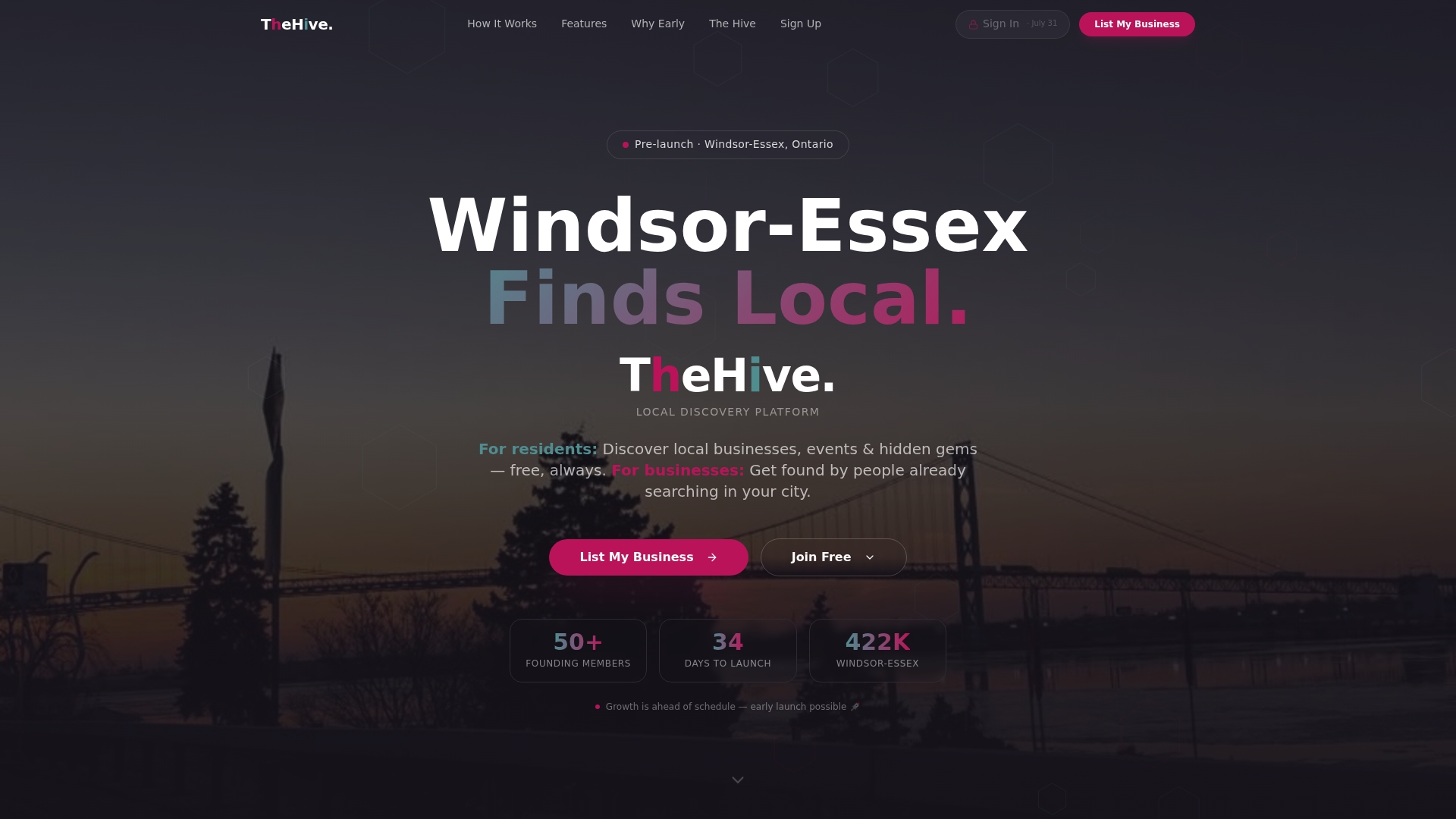
The platform works alongside your Google strategy rather than replacing it. Every review you earn, every event you list, every profile update feeds a ranking system built on genuine customer love instead of who bids the most. Freelancers, new startups, and businesses that have been around for decades all show up on the same footing here, judged by their reputation, not their marketing budget.
If you're already working on your Google reviews, set up your Thehivewindsor listing and start capturing that same momentum on a platform built specifically for Windsor-Essex customers looking for exactly what you offer.
Frequently Asked Questions
Do star ratings affect search rank on Google's main search results? Star ratings affect local search rank (Local Pack, Maps, Business Profile) but do not directly change standard organic blue-link rankings, according to Google's own guidance.
How many reviews do I need to see a local-pack impact? Businesses adding 20 or more recent reviews saw measurable local-pack position gains within 90 days in one study of over 1,200 accounts, though results vary by industry and competition.
Is a 5-star rating better than 4.5 stars for ranking? Not necessarily. A steady 4.2 to 4.8 range with consistent review volume tends to perform better than a perfect score, which can sometimes trigger authenticity concerns.
Can I add star ratings to my website with structured data? You can implement review schema markup, but Google decides whether to display it as a rich snippet and often favors third-party aggregated reviews over self-hosted ones.
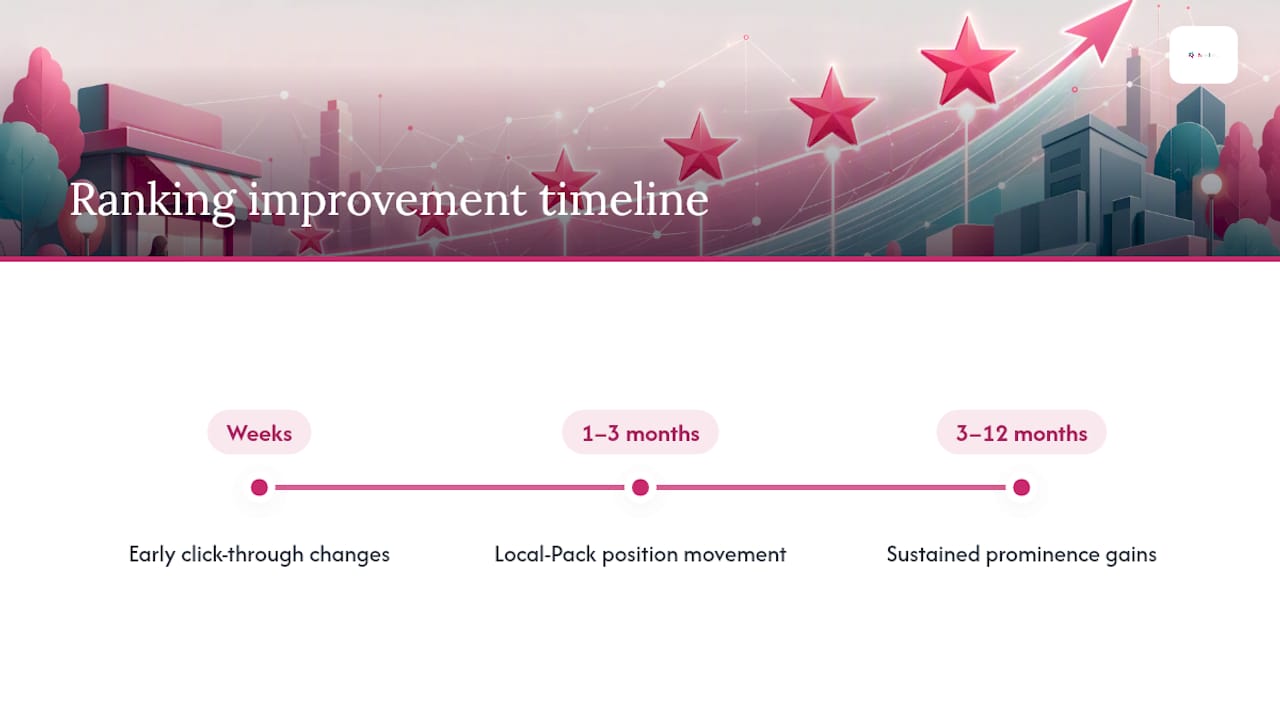
How long does it take to see ranking improvement from more reviews? Expect early click-through changes within weeks, local-pack movement within 1 to 3 months, and sustained prominence gains building over 3 to 12 months.
Sources
- Google Business Profile help — How Google determines local search results
- Google Star Rating Guide: How Reviews Work & Increase ... — Search Engine Journal
- Do Google Reviews Affect Ranking? - 2026 SEO Evidence — BGR Review
- Overestimating Stars, Underestimating Numbers: The Hidden Impact of Rating Formats — Journal article