

Reputation-based ranking is the practice of ordering local directory listings by real customer reviews, community engagement, and corroborating presence rather than by ad spend or paid placement. On Thehivewindsor, your position in search results reflects what the community actually says about you.
- Review volume and velocity move your rank fastest — consistent new reviews outperform a one-time burst.
- Listing completeness and consistency across Google Business Profile and Thehivewindsor matter — gaps and mismatched data suppress visibility.
- No paid ads are involved — every Windsor–Essex business competes on merit, from a 40-year-old shop to a freelancer just starting out.
Key Takeaways
Reputation-based ranking rewards consistent review generation, listing accuracy, and local corroboration — no ad spend required.
| Point | Details |
|---|---|
| Reviews drive rank fastest | Businesses with ~304 reviews outperform those with ~117 in AI recommendation tiers. |
| Listing consistency is foundational | Matching NAP across Thehivewindsor, GBP, and directories removes confidence gaps. |
| Corroboration beats single fixes | Local press, events, and community mentions push a business from described to recommended. |
| Track velocity, not just totals | Review velocity is a leading indicator; local pack inclusion follows weeks to months later. |
| Thehivewindsor ranks on merit | The platform orders listings by community reviews and engagement, with no paid placement. |
Table of Contents
- How reputation-based ranking works in a local directory
- Which signals actually move the needle
- Why AI sentiment and AI recommendation are not the same thing
- A concrete checklist to improve your reputation ranking
- What to track and how long changes take
- Risks: fake reviews, gaming, and how the platform protects trust
- How to audit your listing and correct errors
- How reputation ranking plays out locally in Windsor–Essex
- Why community-driven ranking matters more than people realize
- Thehivewindsor ranks your listing on what you've earned, not what you've spent
- Sources
How reputation-based ranking works in a local directory
The system operates in three layers, each building on the one before it. Understanding them tells you exactly where to put your energy.
Layer 1: Awareness. The platform and AI tools first ask whether your business is known at all. A complete, consistent listing on Thehivewindsor, a verified Google Business Profile, and mentions across local sources establish that you exist and are findable.
Layer 2: Reputation description. Once a business is identified, the system evaluates how it is described. Review sentiment, rating averages, response patterns, and listing details all feed this layer. A study of 10,000 local businesses found these three layers are distinct — being known or described positively does not guarantee recommendation.
Layer 3: Recommendation and confidence. This is where ranking actually happens. Answer engines use a confidence-based selection process that weighs entity authority, review quality, citation trust, structured data completeness, and brand recognition simultaneously. It is selection, not a simple ordered list.
Corroboration is what separates layer 2 from layer 3. A single glowing review profile is weaker than a business that also appears in local event write-ups, community forums, and third-party directories. Hyperlocal PR paired with online reviews helps search and AI systems pick up new local signals and surface businesses faster.
Pro Tip: Start your audit with entity data — your business name, address, and phone number (NAP). Inconsistencies here undermine every other signal you build.
Which signals actually move the needle
Not all reputation factors carry equal weight. Here is the priority order, backed by research:
- Review volume and velocity (highest impact). Businesses most frequently recommended by AI averaged around 304 reviews versus roughly 117 for the least-recommended tier in the AI visibility benchmark. Steady new reviews signal an active, trusted business.
- Local pack presence and citations. Google confirms that prominence — driven by review count, ratings, and inbound links — directly shapes local results. Map-pack inclusion amplifies every other signal.
- Listing completeness and NAP consistency. Incomplete profiles create inference gaps that lower confidence scores. A fully filled Thehivewindsor profile and a verified GBP work together.
- Recency of content and activity. Recent photos, updated hours, new event pages, and fresh reviews all signal that a business is operating and engaged.
- Corroborating third-party mentions (medium impact). Forum posts, local news coverage, and community group mentions build the cross-source authority that pushes a business from described to recommended.
- Structured data on your website (lower but meaningful). LocalBusiness schema reduces inference and raises recommendation confidence when other signals are comparable.
- Technical SEO and site speed (weakest standalone lever). These matter for your own website's ranking but have limited direct effect on directory reputation scores when the stronger signals above are missing.
Reviews are now a direct revenue signal — they affect map-pack inclusion, ranking order, and zero-click results throughout the local customer journey. (LocalDataExchange)
Why AI sentiment and AI recommendation are not the same thing
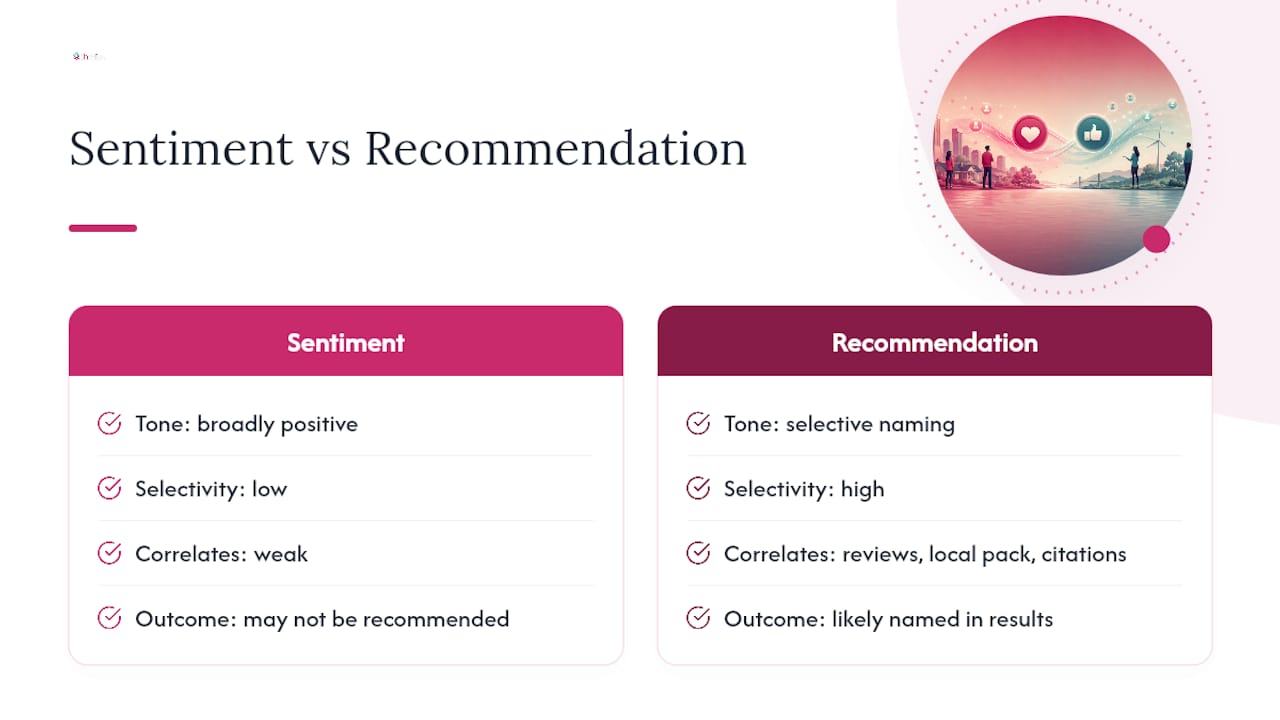
AI tools tend to describe most businesses in positive terms. That sounds encouraging, but it creates a false sense of security.
Sentiment is cheap. Recommendation is selective. The same benchmark study found that AI sentiment skewed heavily positive across businesses at all visibility levels, yet large shares of those businesses were never actually recommended when a user asked for a suggestion. Positive language in an AI overview does not mean the system will name your business when someone asks "best café in Windsor."
Recommendation correlates with the corroborating signals described above — review volume, local pack presence, consistent citations. Sentiment alone is a weak differentiator. A business with 50 glowing reviews and no local press mentions will often lose a recommendation slot to a competitor with 200 average reviews and three local event write-ups.
Pro Tip: Track whether AI tools actually name your business in response to category queries ("best [your type] in Windsor"), not just whether they describe you warmly when asked directly. That distinction tells you where you sit in the recommendation layer.
A concrete checklist to improve your reputation ranking
Work through these in order. The first three deliver the fastest movement.
- Audit your NAP data (Week 1). Check that your business name, address, and phone number match exactly across Thehivewindsor, Google Business Profile, Yelp, and any local directories. One character difference suppresses corroboration.
- Complete your Thehivewindsor and GBP profiles (Week 1–2). Add photos, business hours, a description, service categories, and a website link. Profiles with complete data consistently score higher on listing completeness signals.
- Launch a 30-day review velocity push (Weeks 2–5). Ask every customer at the point of highest satisfaction — right after a completed service or a great meal. A simple, effective ask: "We'd love a quick Google or Hive review — it takes 30 seconds and helps us a lot." Text or email works better than a verbal ask alone.
- Respond to every review within 48 hours (Ongoing). A short, genuine response to both positive and negative reviews signals active management and builds trust. For negative reviews, acknowledge the issue, offer to resolve it offline, and keep the tone calm.
- Add event listings and photos monthly (Ongoing). Events create fresh, time-stamped content that feeds the recency signal. Local businesses discovered through events often see faster corroboration growth than those relying on reviews alone.
- Build local corroboration (Month 2–3). Reach out to a local Windsor–Essex blogger, community Facebook group, or neighborhood newsletter. A single genuine write-up from a local source carries more weight than ten generic directory submissions.
- Add LocalBusiness schema to your website (Month 1–2). This is a one-time technical task that reduces inference for AI systems and raises confidence scores when your other signals are already solid.
Pro Tip: Combine a local event or promotion with a review push. Customers who attend an event are already engaged — a follow-up message the next day ("Thanks for coming out — a quick review means the world") converts at a much higher rate than a cold ask.
What to track and how long changes take
| Metric | Movement speed | Practical target |
|---|---|---|
| Review count (total) | Weeks | +5 new reviews per month minimum |
| Review velocity (new per week) | Days to weeks | At least 1 new review per week |
| GBP impressions and actions | 2–6 weeks | Rising impressions after profile update |
| Thehivewindsor profile interactions | 1–3 weeks | Clicks, saves, and contact taps |
| Local pack appearances | 1–3 months | Appearing for 3+ category queries |
| Direct leads (calls, form fills) | 2–4 months | Measurable lift after review push |
Review velocity is a leading indicator — it moves first and predicts later ranking changes. Local pack inclusion is a lagging signal; expect 1–3 months before a sustained review push shows up there. Check local visibility best practices for Windsor–Essex-specific benchmarks.
Risks: fake reviews, gaming, and how the platform protects trust
Gaming the reputation scoring system is tempting and almost always counterproductive.
- Fake reviews trigger automated and manual removal. A cluster of reviews from new accounts, similar IP addresses, or suspiciously similar language patterns gets flagged quickly.
- Review swapping (trading reviews with other businesses) violates platform policies and Google's guidelines, and both parties risk removal.
- Incentivized reviews without disclosure violate FTC guidelines and platform rules. If you offer a discount for feedback, disclose it clearly — and never tie the incentive to a positive rating.
- Buying reviews from third-party services risks permanent delisting and destroys community trust, which is the actual currency on Thehivewindsor.
Thehivewindsor uses community reporting, account verification, and review pattern analysis to catch abuse. If you spot a fake review on a competitor's listing or your own, use the platform's report flow with as much detail as possible. For negative reviews you believe are fraudulent, document your evidence before reporting — a screenshot, a date discrepancy, or proof the reviewer was never a customer strengthens the case.
Respond publicly to every negative review, even disputed ones. A calm, professional response signals trustworthiness to future readers regardless of the review's legitimacy.
How to audit your listing and correct errors
Run this audit every 90 days:
- NAP consistency: Search your business name on Google, Thehivewindsor, Yelp, and Apple Maps. Every listing should show identical name, address, and phone number.
- GBP completeness: Verify hours, categories, photos (minimum 5), website URL, and description are filled in and current.
- Review content: Check for reviews that violate policies (fake, off-topic, or abusive). Flag them through GBP's "Flag as inappropriate" flow or Thehivewindsor's report tool.
- Third-party mentions: Google your business name plus "Windsor" and scan the first two pages for incorrect information on aggregator sites.
To request a correction on Thehivewindsor: Contact the platform directly through the listing management dashboard, include the specific error and supporting evidence (a photo of your storefront address, a utility bill, or a business registration document), and allow 3–5 business days for review. For GBP corrections, use the "Suggest an edit" function or the Business Profile Manager and follow Google's verification steps.
How reputation ranking plays out locally in Windsor–Essex
A local café in Windsor updated its Thehivewindsor profile, ran a 30-day review push timed to a seasonal promotion, and submitted two event listings for community tastings. Within six weeks, its review count climbed, its local pack appearances increased for neighborhood searches, and direct contact requests through the platform rose noticeably. The signals that moved were review velocity, event recency, and corroborating mentions from a local food blogger who covered one of the tastings.
Three immediate actions for Windsor–Essex businesses and event organizers:
- Tag your neighborhood zone on Thehivewindsor (Walkerville, South Windsor, Amherstburg, etc.) so zone-based searches surface your listing to nearby residents.
- Collaborate with local creators. A short feature from a Windsor-based Instagram creator or community newsletter counts as corroborating coverage. Review programs in smaller Essex communities show that even modest local press accelerates discovery.
- Time your review requests to events. Ask for reviews within 24 hours of an event, a workshop, or a service completion — that is when satisfaction is highest and the ask feels natural.
[Insert specific case studies or success stories related to business discovery or local visibility on Thehivewindsor.]
Why community-driven ranking matters more than people realize
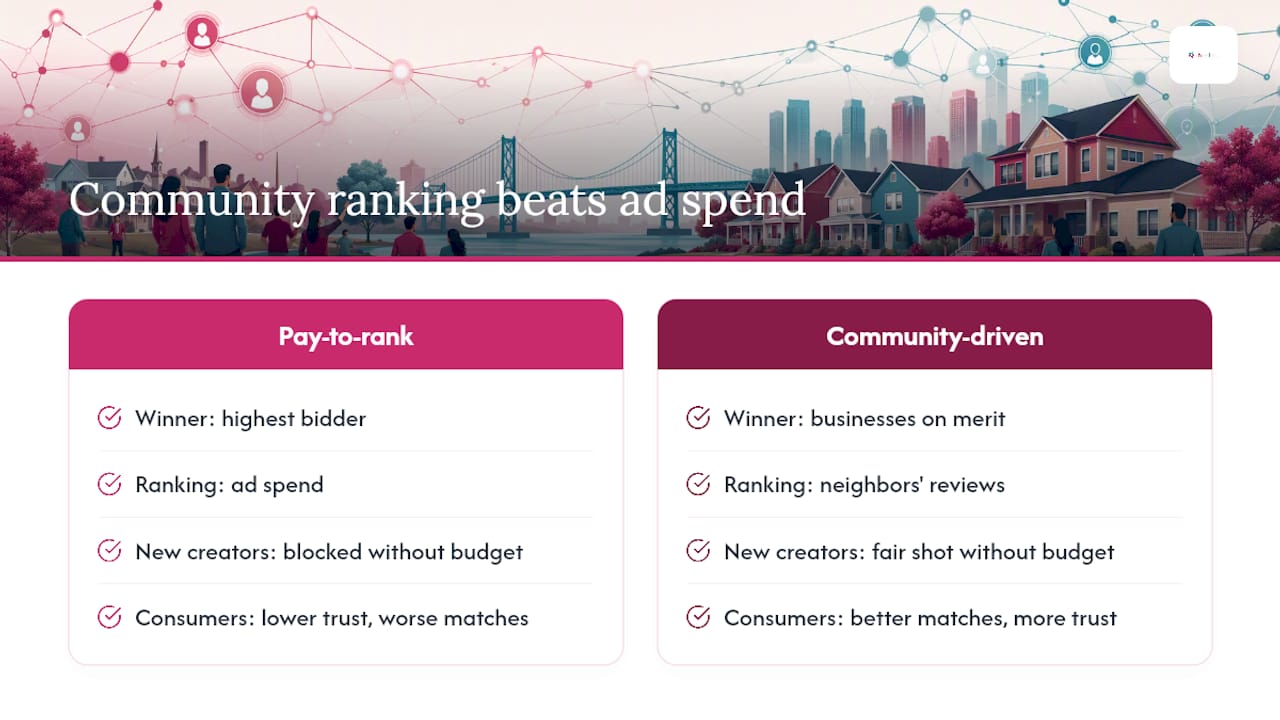
Most business owners assume the directory with the biggest ad budget wins. That assumption is worth questioning. A pay-to-rank system rewards whoever spends most, not whoever serves best. Windsor–Essex has real, established businesses that have earned genuine community trust over decades — and new freelancers and creators who deserve a fair shot at discovery without a marketing budget.
Community-driven ranking changes that equation. When a local resident searches for a plumber or an event space and the top result reflects actual reviews from actual neighbors, the whole community benefits: better matches, more trust, stronger local spending. The civic case for this model is straightforward, and the economic case is just as strong. Businesses that win on merit tend to keep earning reviews, which compounds their visibility over time.
Thehivewindsor was built on exactly this premise. The platform exists because Windsor–Essex deserves a discovery tool that works for the community, not for the highest bidder.
Thehivewindsor ranks your listing on what you've earned, not what you've spent
Every tactic in this article — reviews, listing completeness, event pages, local corroboration — feeds directly into how Thehivewindsor orders its listings. The platform's ad-free discovery model means a 2-year-old food truck and a 40-year-old hardware store compete on the same signals: real reviews and real community engagement.
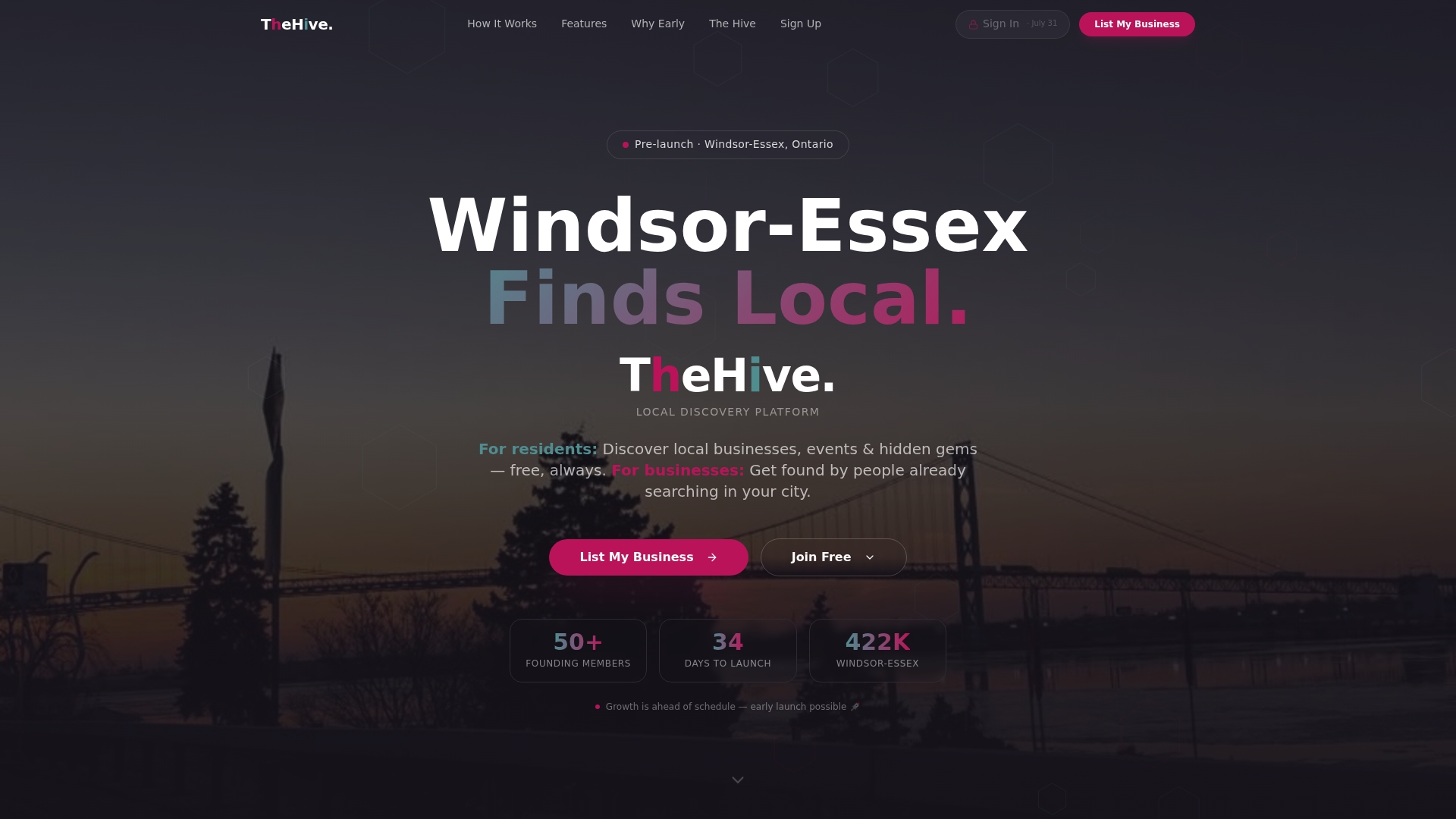
The platform features include profile completeness tools, review-request flows, event listing pages, and optional business coaching for owners who want hands-on help building their reputation. There are no paid ranking slots. Your position reflects your community standing, full stop.
Claim your listing or sign up at Thehivewindsor and start building the review profile that moves you up.
Sources
- The AI visibility benchmark: how 10,000 local businesses actually perform in ChatGPT and Perplexity
- Your Business Profile on Google: Why and how local results appear
- Why Reviews Are Now a Revenue Signal, Not Just Social Proof
- How Answer Engines Choose Local Businesses: Selection Signals, Structured Data and Brand Authority | Koading