

Independent shops use discovery apps because they put specific, in-stock products in front of nearby shoppers at the exact moment those shoppers search for them. That floor sample, that open-box speaker, that one-off vintage jacket, all become findable to someone three blocks away who typed the product name, not your store name, into a search bar. Product-level discovery surfaces the item first and the retailer second, which means a shop nobody has heard of can still show up as the answer.
Three things make this work: a search that matches products instead of brand names, a location layer that filters results to "near me," and inventory data accurate enough to trust. The payoff shows up fast in foot traffic from people who already know the item is there before they walk in.
Shops sign up for a few specific reasons:
- Getting slow-moving or one-off inventory in front of shoppers actively looking for it
- Reaching nearby, intent-driven customers who never would have found the store by name
- Cutting customer acquisition cost compared to paid ads or boosted social posts
Key Takeaways
Independent shops use discovery apps because product-level search puts specific in-stock items in front of nearby shoppers at the exact moment they're searching for them.
| Point | Details |
|---|---|
| Product-first search drives visits | Shoppers find specific items, not just store names, which creates first encounters with unknown shops. |
| Inventory data is the entry ticket | Feed accurate SKU, price, and location data manually, via spreadsheet, or through POS sync. |
| Start free, scale with results | Test a free tier with your best clearance items before committing to a paid subscription plan. |
| Track five core numbers | Watch impressions, clicks-to-profile, calls or directions, conversions, and repeat customers. |
| Community-first discovery rewards reviews | Thehivewindsor ranks Windsor-Essex listings by real reviews and engagement instead of paid placement. |
Table of Contents
- Why Independent Shops Use Discovery Apps to Grow Foot Traffic
- How Do Discovery Apps Connect Shoppers to Your Products?
- Why Product-Level Discovery Matters Beyond Foot Traffic
- What Does It Cost to Get Listed on a Discovery App?
- What Data Do You Share, and Who Controls It?
- How Do You Know If a Discovery App Is Working?
- How theHive Windsor Approaches Community-First Discovery
- Comparing Discovery Options for Independent Retailers
- How to Optimize Your Listing for Maximum Exposure
- Making Discovery Apps Work With Your Other Channels
- Get Your Shop Found Without Paying for Placement
- Sources
Why Independent Shops Use Discovery Apps to Grow Foot Traffic
The core benefits break down into five categories: product visibility, qualified foot traffic, faster inventory turnover, low-cost customer acquisition, and exposure to shoppers who've never heard of you. Each one solves a problem that's specific to small, low-awareness retailers rather than big-box chains with name recognition already baked in.
- Product visibility: your specific SKUs, not just your store name, show up in search
- Qualified foot traffic: people arrive already knowing what they're coming for
- Faster turnover: clearance items, floor samples, and one-offs move quicker
- Low-cost acquisition: no ad spend required to get discovered
- New nearby shoppers: people who never encountered your storefront or your Instagram
Floor samples, open-box electronics, discontinued colors, and one-of-a-kind pieces benefit the most, since these are the items shoppers actively hunt for by name or description rather than by browsing a category page.
Pro Tip: List your highest-margin, easiest-to-photograph slow movers first. A quick win on one or two items builds momentum and gives you real data before you invest time cataloging your entire inventory.

Discovery apps don't replace your website or your social accounts. They handle a different job: making specific inventory findable to people who aren't already following you or typing your store's name into a search bar.
How Do Discovery Apps Connect Shoppers to Your Products?
A shopper types "used trombone Windsor" or "leather couch near me," and a discovery app matches that query to specific listed items, not just business categories. That's the mechanic behind product-level search: the platform indexes individual products, then links each one back to the store that carries it and its map location.
To make that work, you feed the platform basic data: item title, price, availability, and store location. Most independents enter this manually at first, some batch-upload with a spreadsheet, and shops running a point-of-sale system can often sync inventory automatically. No special hardware is typically required.
The data flow looks like this:
- Product entered into the platform (manually, via feed, or POS sync)
- Platform indexes it with location and category tags
- Search engines, map apps, and increasingly AI assistants pull from that index
- Shopper query surfaces the item and routes them to your store
That last link matters more than it used to. AI-first discovery now answers "where can I find X nearby" using structured local data, which rewards shops with clean, accurate listings over shops with none.
Why Product-Level Discovery Matters Beyond Foot Traffic
Getting more visits is the obvious win, but the deeper value is in who shows up. A shopper who found your rocking chair through a product search already knows the price, the condition, and that it's in stock. They're not browsing, they're closing.
That changes what happens on the sales floor. Instead of explaining what you carry, you're answering questions about delivery, warranty, or whether you have a second color in the back. Sales conversations get shorter and more direct, and conversion per visit tends to climb because the guesswork is already gone before the customer opens your door.
Stock uncertainty is one of the biggest silent killers of a visit. Someone who isn't sure you have what they want will just check three other places online before committing to drive over. Confirming availability up front removes that friction entirely.
Product-first discovery creates first-time encounters with shops that shoppers would otherwise never see. The item earns the visit. The store earns the relationship.
- Faster clearance of one-off or discontinued items
- More deliberate, higher-intent showroom visits
- Higher average transaction value from pre-qualified shoppers
- Shorter sales conversations, more time spent closing instead of explaining
What Does It Cost to Get Listed on a Discovery App?
Setup is mostly a checklist, not a project:
- Create a business profile with hours, location, and contact details
- Add inventory, either manually, via spreadsheet feed, or through POS sync
- Upload clear photos and honest, specific descriptions
- Fill out your review and rating profile so early customers have somewhere to leave feedback
- Confirm your listing displays correctly on map and search results
Pricing models generally fall into three buckets: free basic listings, flat subscription fees for expanded visibility or promotional tools, and transaction-based commission. Free tiers usually suit shops just testing the channel; subscriptions make more sense once you've confirmed the traffic converts.
Initial setup for a shop with a modest catalog typically takes a few hours spread over a week. Ongoing maintenance, updating stock and swapping photos, usually runs a short weekly time investment. Configuration matters more than most owners expect: setup guides for similar tools show that shops with a few hundred SKUs see the biggest gains from a small amount of tagging and synonym work, not from a massive overhaul.
Pro Tip: Start on a free tier, list your 15 best clearance or one-off items, and watch what happens for two to three weeks before paying for anything extra.
What Data Do You Share, and Who Controls It?
You'll typically share your inventory list, store location, business contact details, and, on some platforms, optional sales performance data. Location and inventory are usually required; sales data is almost always optional.
You control your own listing content, and reviews come from real customers rather than paid placement. Opting out generally means removing your profile or pausing your subscription.
- Share stock status and pricing, but skip detailed sales volume if you'd rather keep that private
- Confirm who can edit your listing before handing off access to staff
- Check that any paid plan routes billing through a secure, documented payment system before entering card details
Pro Tip: You can stay fully discoverable while keeping your actual sales numbers private. Stock status and pricing are what shoppers need. Revenue data isn't.
How Do You Know If a Discovery App Is Working?
Track five numbers: impressions (how often your listings appear), clicks-to-profile, calls or direction requests, in-store conversions, and repeat customers. Most platforms surface the first three in a dashboard; the last two require a bit of manual tracking, a coupon code, a "how'd you hear about us" question at checkout, or a quick staff log.
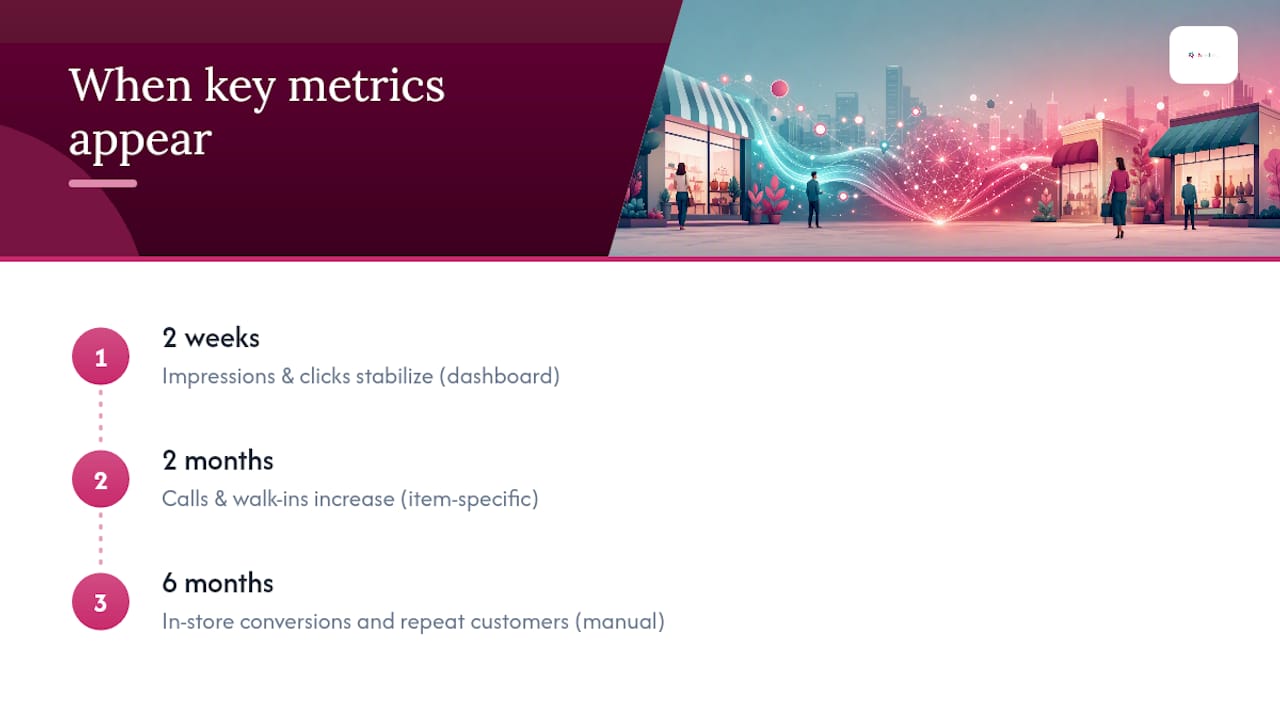
Expect a rough timeline: within two weeks you'll see impression and click data start to stabilize. By two months, you should notice a measurable uptick in calls or walk-ins tied to specific listed items. By six months, repeat customer numbers tell you whether the channel is building loyalty or just one-off traffic.
Removing stock uncertainty is one of the strongest levers here. When a shopper can confirm an item is actually available before driving over, they're far more likely to make the trip instead of checking three other stores online first, a dynamic well documented in how product discovery shapes buying behavior.
How theHive Windsor Approaches Community-First Discovery
theHive Windsor ranks listings by real reviews and community engagement, not by who pays the most for placement. That model rewards shops that earn genuine local loyalty over shops with the biggest ad budget.
Picture a furniture shop with a backroom full of floor samples. It lists ten pieces with honest condition notes and real photos, asks its first five customers to leave reviews, and promotes a weekend clearance event through the platform's event listings. Within a few weeks, those reviews start pulling in shoppers who'd never walked past the storefront.
Get your first few real customers to leave honest reviews before you worry about anything else. Engagement, not ad spend, is what moves you up.
- Ask satisfied customers directly for a review right after a good transaction
- Use event listings to promote clearance weekends or new arrivals
- Lean on referral rewards to turn existing customers into your best marketing channel
Comparing Discovery Options for Independent Retailers
Independent shops generally choose between three types of discovery tools: general map and search platforms, on-site commerce search add-ons, and community-driven local discovery platforms.
General map and search tools (the kind built into most phones) are useful for basic "near me" visibility but treat every business the same regardless of engagement or reputation. On-site tools like Shopify's Search & Discovery app improve how shoppers filter and find products once they're already on your website, using filters, synonyms, and merchandising rules, but they don't help someone find you in the first place.
Community-driven platforms fill that gap. They combine map-based search with review-driven ranking, so a shop's visibility grows with genuine customer engagement rather than ad spend. This matters most for shops with limited marketing budgets and no in-house tech team, since there's no algorithm to game, just actual service and actual reviews.
The right fit usually depends on what problem you're solving. If your website already converts well but nobody's finding it, a community-first discovery layer solves the top-of-funnel problem. If your website itself is hard to search, an on-site tool solves that separately. Most independent shops eventually need both: a way to be found locally, and a way to be searched once someone lands on their site. Treating either one as optional usually means leaving traffic on the table you didn't know existed.
How to Optimize Your Listing for Maximum Exposure
A thin listing gets skipped. A complete one gets clicked. The gap between the two is almost always effort, not budget.
Start with photos: clear, well-lit, multiple angles, no stock imagery. Shoppers searching by product want to see the actual item, especially for floor samples, open-box goods, or anything with visible wear.

Write descriptions the way a customer would search, not the way a catalog would list. "Barely used leather recliner, dark brown, no rips" beats "Recliner, Model 4400" every time, because it matches how people actually type queries.
Keep availability and pricing current. Nothing kills trust faster than a shopper driving over for an item that sold last week. Update stock status the same day something moves, even if it takes two minutes.
Respond to reviews, good and bad. Platforms that rank on engagement reward shops that show up and engage with customer feedback, not shops that go silent after a sale.
Finally, use every free field available: categories, tags, location details, hours. Boutique-format shops in particular benefit from tagging specific attributes (size, color, material) since that's exactly what narrows a broad search down to their exact item.
Making Discovery Apps Work With Your Other Channels
Discovery apps aren't a replacement for your website, your Instagram, or your email list. They're a distinct layer that solves the specific problem of "does this store have the exact thing I'm looking for right now?"
The strongest setups link everything together. Your discovery listing drives a first visit; your email list or loyalty program keeps that customer coming back. Your Instagram builds brand personality over time; your discovery profile answers a transactional question in the moment someone's ready to buy.
A simple way to connect the channels: mention your discovery app reviews in your email newsletter, cross-post event listings from the platform to your social accounts, and make sure your store hours and location match exactly across every channel so customers never hit a dead end. Small mismatches, a wrong closing time, an outdated address, cost you visits you already earned.
Why This Matters to Me
I've watched too many good independent shops stay invisible simply because their inventory lived only in their heads or a spreadsheet nobody outside the store could see. Get your best three items listed this week, then watch what happens before you do anything more elaborate.
Get Your Shop Found Without Paying for Placement
If you've been weighing paid ads against posting more on social media, there's a third option that doesn't require either. Thehivewindsor ranks businesses by real customer reviews and engagement instead of ad spend, so a new shop with genuine local love can outrank a bigger competitor who's just paying more.
The platform works for hobbyists testing side income, startups, and businesses that have operated in Windsor-Essex for decades, all in one place instead of scattered across separate apps and sites. Listings stay free to browse for residents, while businesses choose a subscription tier depending on how much extra visibility, event promotion, or coaching support they want. Create your business listing on theHive Windsor and get your first products or services in front of local shoppers this week.
Sources
- Sometimes the Product Gets Found First | FLRPL Journal - FLRPL Journal
- Shopify Search & Discovery - Customize your storefront search and discovery experience | Shopify App Store