

Local apps are defined as community-focused mobile and web platforms that connect residents to nearby businesses, events, and civic resources without requiring paid advertising to rank. Understanding how small towns benefit local apps reveals a pattern that goes well beyond convenience. These platforms drive measurable economic returns, strengthen social bonds, and give residents a direct stake in their community's digital identity. Cities like Littleton, CO and Pasadena have already demonstrated that a modest investment in a local rewards app can produce returns that most municipal programs never approach.
How small towns benefit local apps: the economic case
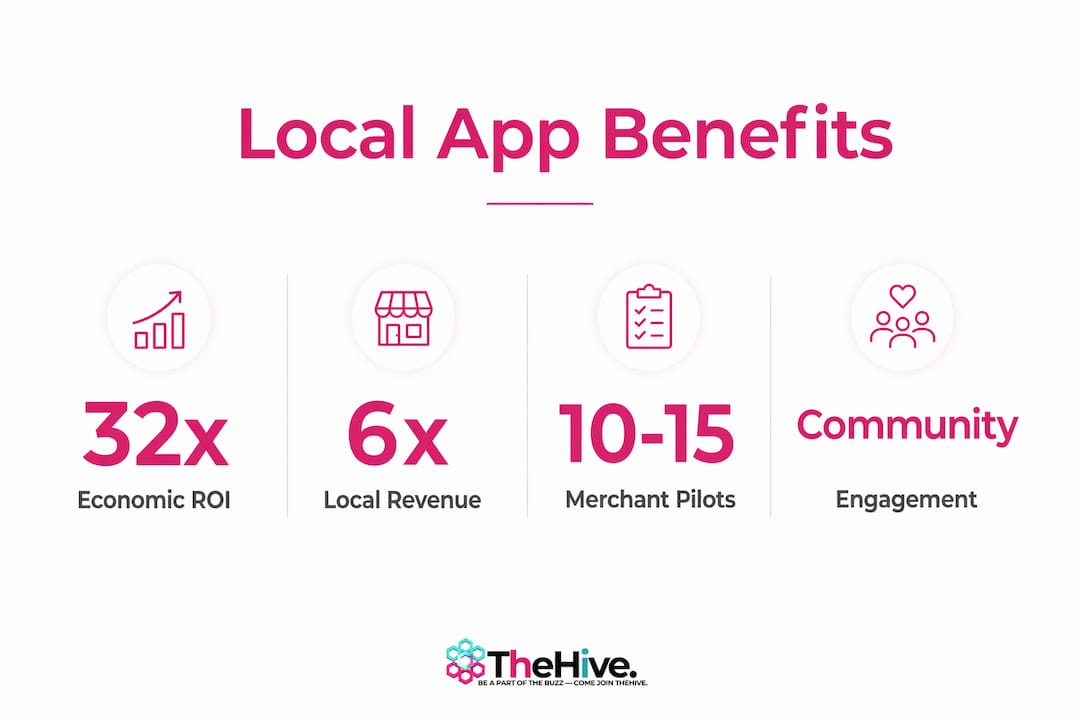
The economic argument for local apps is concrete and well-documented. Community-driven rewards apps can generate returns up to 32x a municipality's initial investment. Pasadena's $10,000 investment in a local rewards program yielded $122,000 in measurable economic impact. That ratio puts local app spending among the highest-ROI tools available to small-town governments.
The customer behavior data reinforces this. Regular customers within the same ZIP code drive six times more revenue for local businesses than occasional visitors. That means a local app that keeps residents shopping in town, rather than driving to a regional chain, compounds its value with every repeat visit. The effect is not linear. Each loyal customer pulled back into the local economy creates a ripple that touches neighboring businesses too.
Local rewards programs also give municipalities real tracking capability. Cities can customize incentives and monitor campaign impact in real time, adjusting which businesses get featured and when. That flexibility makes local apps far more responsive than traditional "shop local" print campaigns, which offer no feedback loop at all.

Pro Tip: If your town is considering a local rewards program, start with a pilot covering 10–15 independent merchants. Measurable results from a small cohort build the political will to expand funding.
| Business type | App-driven benefit |
|---|---|
| Independent retailers | Increased foot traffic from rewards incentives |
| Restaurants and cafes | Repeat visits from loyalty-tracked regulars |
| Service providers | Discovery by new residents unfamiliar with local options |
| Hobbyists and micro-sellers | First-time visibility without paid advertising |
Understanding why local directories matter for small-town businesses explains why the discovery layer of a local app matters as much as its rewards mechanics.
How do local apps strengthen community engagement?
Economic impact is only half the story. Local apps also build what researchers call the "Village Feeling," a sense of belonging and democratic access to community information. The Veberöd Village app in Sweden demonstrated this directly. Residents used the platform to access community data, coordinate local decisions, and feel genuine ownership over their neighborhood's digital presence. The app was not built to scale globally. It was built to serve one village well.
The Fab City global initiative, which supported Veberöd's model, values replicability over scale. A local app designed for Windsor-Essex should feel like Windsor-Essex, not a generic platform that could belong to any city on the continent. That specificity is what creates daily habit. Residents open an app that reflects their actual community, not a feed optimized for engagement metrics set by a distant algorithm.
Non-transactional features drive that daily habit most effectively. Apps that include:
- Digital notice boards for community announcements
- Local event listings updated by residents and organizers
- Stewardship campaigns for parks, trails, and public spaces
- Neighborhood forums for non-commercial conversation
These features pull residents in before they ever make a purchase. Once the habit forms, the commercial layer of the app benefits from that existing attention.
Small towns also have a structural advantage that large cities lack. Word-of-mouth surpasses paid advertising for software adoption in tight-knit communities. A Chamber of Commerce meeting, a church bulletin, or a conversation at the farmers market can drive more downloads than a Facebook ad campaign. That organic distribution is free, and it comes pre-loaded with trust.
Pro Tip: Design your app's onboarding around a single non-commercial action, like checking this week's community events. Residents who open an app for information become buyers over time.
What challenges must small towns consider when adopting local apps?
Local apps are not without friction. The most underappreciated risk is viral attention. Social apps accelerate discovery but small towns must integrate civic systems like capacity management to prevent infrastructure stress. A trail, a restaurant strip, or a weekend market can become overwhelmed when a local app or social platform sends a sudden surge of visitors. Without reservation flows or capacity limits built into the experience, the app creates the very problem it was meant to solve.
Sustainable engagement is the second major challenge. Continuous engagement beats one-time launch spikes in every documented case of local digital tool success. A town that launches an app with a big event and then goes quiet will see engagement collapse within weeks. The platforms that survive are the ones that build a content and participation rhythm, seasonal campaigns, weekly event updates, and rotating business features, that give residents a reason to return.
The third challenge is over-reliance on a single voice. If one local influencer or business owner drives the majority of app activity, the platform is one departure away from losing its audience. Distributed participation, where dozens of residents contribute content and reviews, creates a platform that no single person can break by leaving.
- Audit your infrastructure before promoting app-driven visitation. Know your parking, trail, and seating capacity before you invite the internet.
- Build a content calendar for the first six months before launch. Consistent posting is not optional.
- Recruit a diverse group of contributors, not just the most vocal community members.
- Integrate civic systems like booking flows or capacity alerts directly into the app experience.
- Plan for seasonal variation. Summer engagement patterns differ sharply from winter ones in most small towns.
How can residents and local leaders use local apps effectively?
Residents are not passive beneficiaries of local apps. They are the engine. Offline community engagement is the key to successful app adoption. Platforms that recruit 50–100 active founding members before broad digital promotion consistently outperform those that launch cold to a general audience. Those founding members seed the reviews, events, and conversations that make the app worth opening for everyone else.
For residents, the most direct contribution is participation. Writing a review for a local business, sharing an event listing, or posting a stewardship update for a community trail costs nothing and adds real value to the platform. New businesses get discovered locally through exactly this kind of organic activity, not through paid placement.
Local leaders can take a more structured approach:
- Partner with micro-influencers who already have authentic local audiences, not just the highest follower counts.
- Use the app to coordinate stewardship campaigns, neighborhood cleanups, and seasonal events that give residents a reason to gather.
- Track participation metrics quarterly and adjust featured content to reflect what residents actually engage with.
- Create a feedback loop between app data and municipal planning. If a park gets heavy app-driven traffic, that signals a need for infrastructure investment.
Peer recommendations convert browsers into visitors. Social apps combined with actionable local content and stewardship messaging create a cycle where residents promote their town authentically, which attracts new visitors, who then discover local businesses and return as regular customers.
Pro Tip: Ask your five most loyal local business supporters to post their first review on launch day. Social proof from known community members carries more weight than any promotional copy.
Key Takeaways
Local apps generate the strongest returns when residents treat participation as a civic act, not just a consumer behavior.
| Point | Details |
|---|---|
| Economic ROI is measurable | Local rewards programs have returned up to 32x municipal investment in documented cases. |
| Regular customers are the real asset | ZIP-code-local customers drive six times more revenue than occasional visitors. |
| Non-transactional features build habit | Event boards and notice features create daily app use before any purchase happens. |
| Offline activation comes first | Recruiting 50–100 founding members offline before launch predicts long-term app success. |
| Sustained engagement beats launch hype | Continuous content rhythm, not a single event, determines whether a local app survives. |
What I've learned watching local apps succeed and fail
I've watched enough local app launches to know that the technology is almost never the problem. The problem is almost always the assumption that building the platform is the hard part. It isn't. Keeping people coming back after the novelty wears off is where most efforts fall apart.
The towns that get it right treat their local app like a community institution, not a product launch. They assign someone to update it the way a library assigns someone to curate new arrivals. They celebrate the businesses that participate. They make residents feel that their review or event post actually matters to someone. That feeling of mattering is what the Veberöd model got right, and it's what most tech-first approaches miss entirely.
I'm also skeptical of the single-influencer strategy. One person with 10,000 followers can spike your downloads in a week and leave you with a ghost town the week after. Distributed participation, where the baker, the trail steward, the school parent, and the retired shop owner all contribute, creates something no influencer departure can undo. That's the version of a local app worth building.
The community-driven business support model works because it distributes ownership. When residents feel like co-creators rather than users, they protect the platform. They tell their neighbors. They post without being asked. That's the outcome worth designing for.
— randy
Thehivewindsor: local discovery built for Windsor-Essex
Thehivewindsor is Windsor-Essex's local search and discovery platform, built so residents never have to jump between multiple apps or websites to find what's happening in their community.
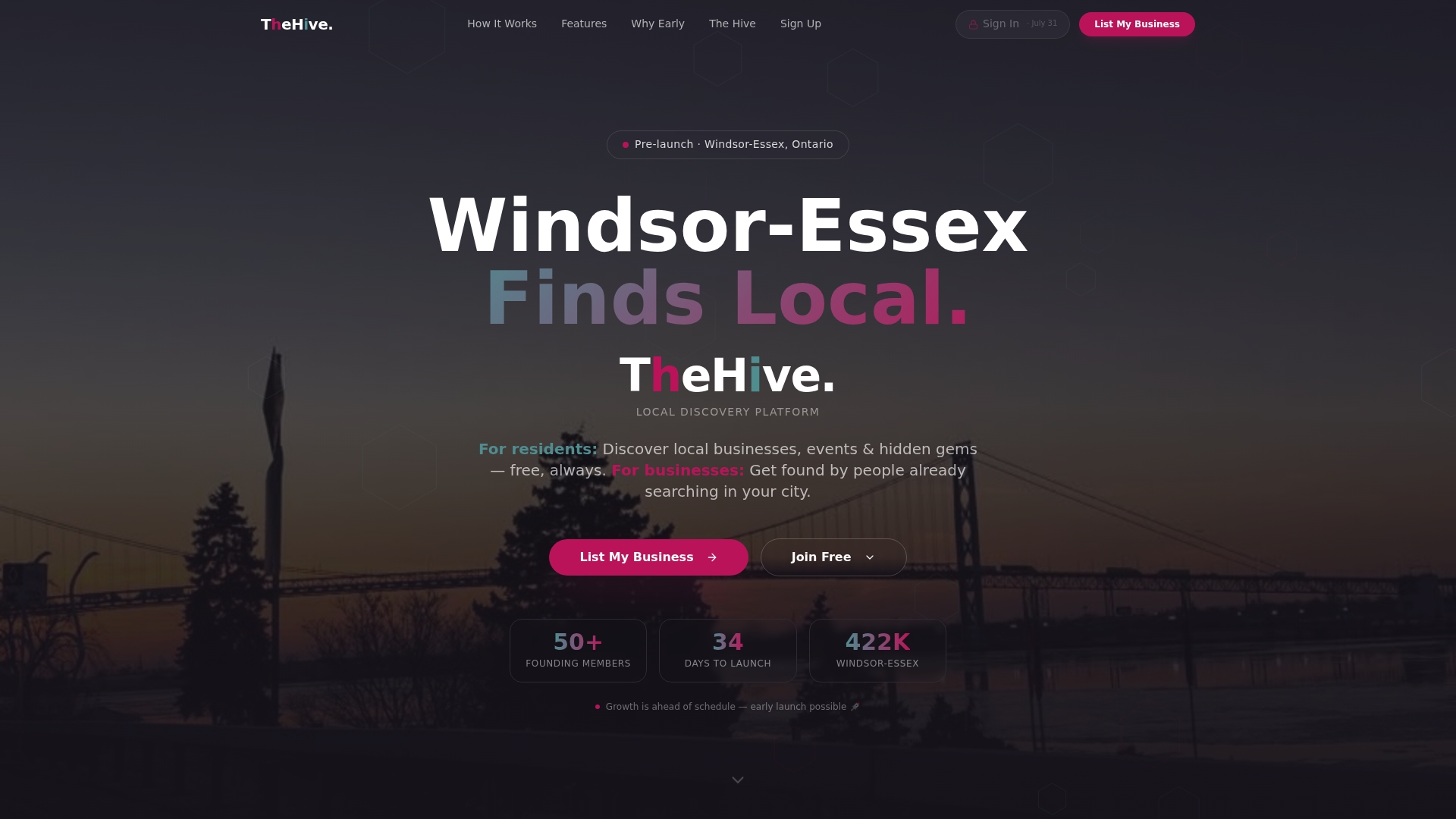
The platform ranks businesses by the reviews and community love they earn, not by how much they spend on ads. That means a hobbyist selling handmade goods gets the same fair shot as a business that has operated for 40 years. From event listings to local business discovery, everything Windsor-Essex is in one place. Residents can join the platform and start supporting local businesses today, or explore what's available across the region before signing up.
FAQ
What is a local app in the context of a small town?
A local app is a community-focused mobile or web platform that connects residents to nearby businesses, events, and civic resources. Unlike national platforms, local apps are built to reflect the specific culture and needs of one community.
How do local apps grow local economies?
Local rewards apps have returned up to 32x their initial municipal investment in documented cases, and regular local customers drive six times more revenue than occasional visitors. These two effects compound when an app keeps residents shopping within their own ZIP code.
What makes a local app succeed long-term?
Sustained engagement beats launch momentum every time. Platforms that maintain a consistent content rhythm, recruit diverse community contributors, and integrate civic tools like event listings and stewardship campaigns outlast those built around a single launch event.
How can residents support a local app without technical skills?
Writing reviews, sharing event listings, and posting about local businesses are the most effective contributions a resident can make. These actions seed the social proof that makes the platform worth using for everyone else.
Are local apps useful for rural areas specifically?
Local apps are especially effective in rural and small-town settings because word-of-mouth distribution replaces the need for paid advertising. Tight-knit social networks, Chamber meetings, and community events give local apps an organic growth channel that urban platforms cannot replicate.