

Yes, your 40-year business still needs up-to-date online listings. Listings are the discovery and verification layer that customers and AI use to find and trust local businesses today, regardless of how long you have been open.
Your 1-hour checklist:
- Claim or verify your Google Business Profile (Google Maps pulls from it directly)
- Confirm your NAP: name, address, and phone number are exactly correct
- Check that your hours reflect today's reality, including holiday exceptions
Your 1-week actions:
- Update Apple Business Connect (Apple Maps serves iPhone users who never open Google)
- Correct your Yelp profile: hours, photos, and website URL
- Sync your Facebook/Meta Business Profile with the same NAP
- Claim Bing Places (often overlooked, still used by older demographics)
- Confirm your website link on every listing points to a live, mobile-friendly page
According to HubSpot's consumer report, a large majority of consumers search before visiting a business, and many visit within a week of finding it online. That pipeline starts with a listing.
Table of Contents
- What should you check monthly vs. annually?
- How do you make listings work for AI and voice search?
- How should you handle reviews to protect your reputation?
- How do you keep information consistent across all platforms?
- What tools help you manage listings without a full-time effort?
- Key Takeaways
- Legacy businesses have a structural advantage when listings are current
- Thehivewindsor keeps Windsor-Essex legacy businesses discoverable
- Useful sources and further reading
What should you check monthly vs. annually?
Monthly (under 90 minutes):
- Add one new photo to your Google Business Profile
- Reply to any reviews posted in the past 30 days
- Verify hours are still accurate, especially around local holidays
- Post one update or event to your GBP and Facebook profile
Annually:
- Full NAP audit across Google Business Profile, Apple Business Connect, Yelp, Facebook, and Bing Places
- Refresh your primary cover photo and business description
- Add LocalBusiness schema (structured data) to your website if it is not already there; it signals your address, hours, and category directly to search engines
- Review and remove any duplicate listings that have accumulated over the years
ShopAppy's main-street guidance confirms that a regular, consistent weekly rhythm across key assets (complete GBP, simple website, one or two social accounts, and key directories) produces compounding visibility gains over time.
How do you make listings work for AI and voice search?
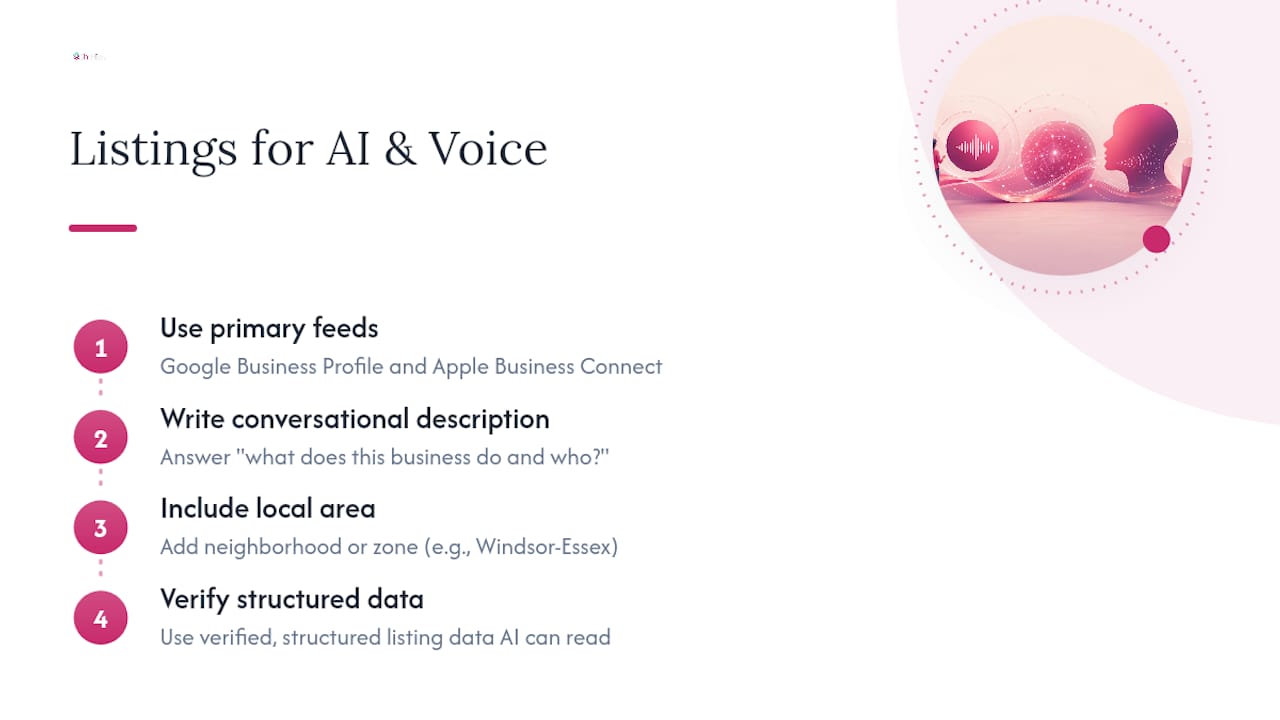
AI assistants and voice search pull answers from structured, verified sources. Google Business Profile and Apple Business Connect are both primary feeds. Write your business description in plain, conversational sentences that answer "what does this business do and who is it for?" Add your neighborhood or zone (e.g., "serving Windsor-Essex since 1985") because voice queries are hyper-local. PYMNTS analysis notes that digitally fluent small businesses gain cumulative advantages in adaptability; for a legacy business, this starts with verified, structured listing data that AI can actually read.
How should you handle reviews to protect your reputation?
Reply to every review, positive or negative, within 72 hours. For negative reviews, acknowledge the issue and offer a direct contact. For positive ones, a two-sentence thank-you that mentions your service or location reinforces local relevance in search. Never argue publicly. Local review management also signals to Google that the listing is actively managed, which influences ranking.
How do you keep information consistent across all platforms?
Pick one "master record" document: a single spreadsheet with your canonical business name, address, phone, website URL, hours, and category. Every listing gets updated from that document. Inconsistencies in NAP across directories are one of the most common reasons established businesses lose local ranking. Atomix Digital's research shows that missing or mismatched information drives abandonment and lost revenue, even when the business itself is excellent.
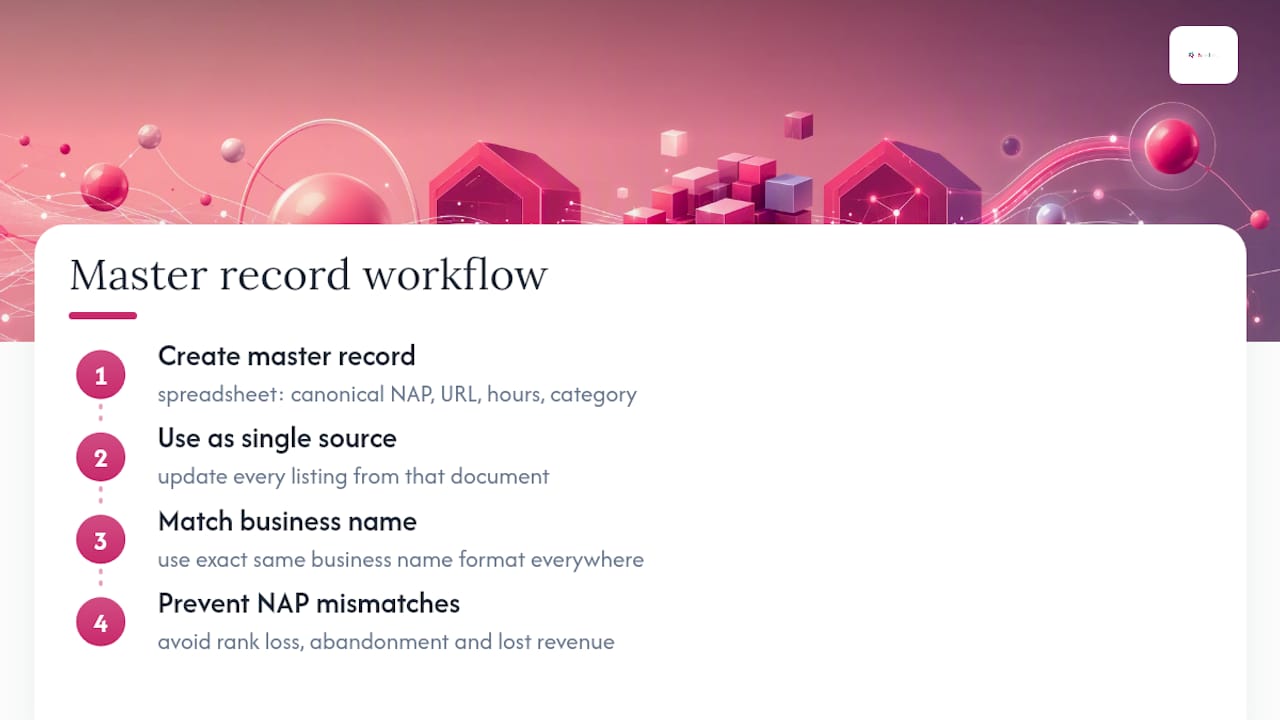
Pro Tip: Use the exact same business name format everywhere. "Windsor Hardware Ltd." and "Windsor Hardware" look like two different businesses to search algorithms.
What tools help you manage listings without a full-time effort?
- Thehivewindsor: Windsor-Essex's local discovery platform that ranks businesses by community reviews, not ad spend, and consolidates local visibility without requiring you to manage multiple apps
WebZum's data confirms that the vast majority of consumers search online before visiting, and businesses with a website alongside their listings convert at higher rates than those relying on social profiles alone. The DreamHost Local Business Trust Index finds that businesses with websites are seen as significantly more trustworthy, and many consumers say a business without a website feels less real.
Key Takeaways
Long-established Windsor-Essex businesses that pair accurate listings with a live website capture the most high-intent local customers and convert them at higher rates than those relying on reputation alone.
| Point | Details |
|---|---|
| Listings drive discovery | 91% of consumers search before visiting, according to HubSpot; an accurate listing is the first step in that path. |
| Website trust is measurable | Businesses with websites are seen as significantly more trustworthy, per DreamHost's data. |
| Consistency protects ranking | One master NAP document prevents the mismatches that quietly erode local search placement. |
| AI needs structured data | Plain-language descriptions and LocalBusiness schema make your listing readable by voice and AI search. |
| Thehivewindsor amplifies legacy | Claim your listing on Thehivewindsor to gain community-driven visibility ranked by real reviews, not ad spend. |
Legacy businesses have a structural advantage when listings are current
The conventional wisdom treats listing management as a chore for new businesses trying to get noticed. That framing misses something important for a 40-year operation: your existing reputation converts better than a newcomer's, but only when a customer can verify it online.
The most common pitfalls for long-established businesses are not obscurity; they are outdated hours from a pandemic-era change that never got corrected, a duplicate listing created when someone tried to "fix" the original, an expired domain redirect that sends visitors to a dead page, and an old phone number still sitting on three directories. Each of these silently erodes trust that took decades to build.
Fixing them leverages what you already have. Repeat customers leave reviews. Community events become GBP posts. An established trading name carries weight in local search when the schema and NAP confirm it. PYMNTS notes that digitization is cumulative; for a legacy business, that means each small update compounds on a foundation competitors cannot replicate overnight.
Pro Tip: Start with your primary photo and NAP. A current storefront photo and a correct phone number take 10 minutes and immediately signal to Google that the listing is actively managed.
Thehivewindsor keeps Windsor-Essex legacy businesses discoverable
Forty years of reputation deserves a listing platform that ranks you on what you have earned, not what you spend. Thehivewindsor is Windsor-Essex's local discovery platform built around community reviews and real engagement, so a business with decades of loyal customers naturally surfaces above newer competitors without buying a top spot.
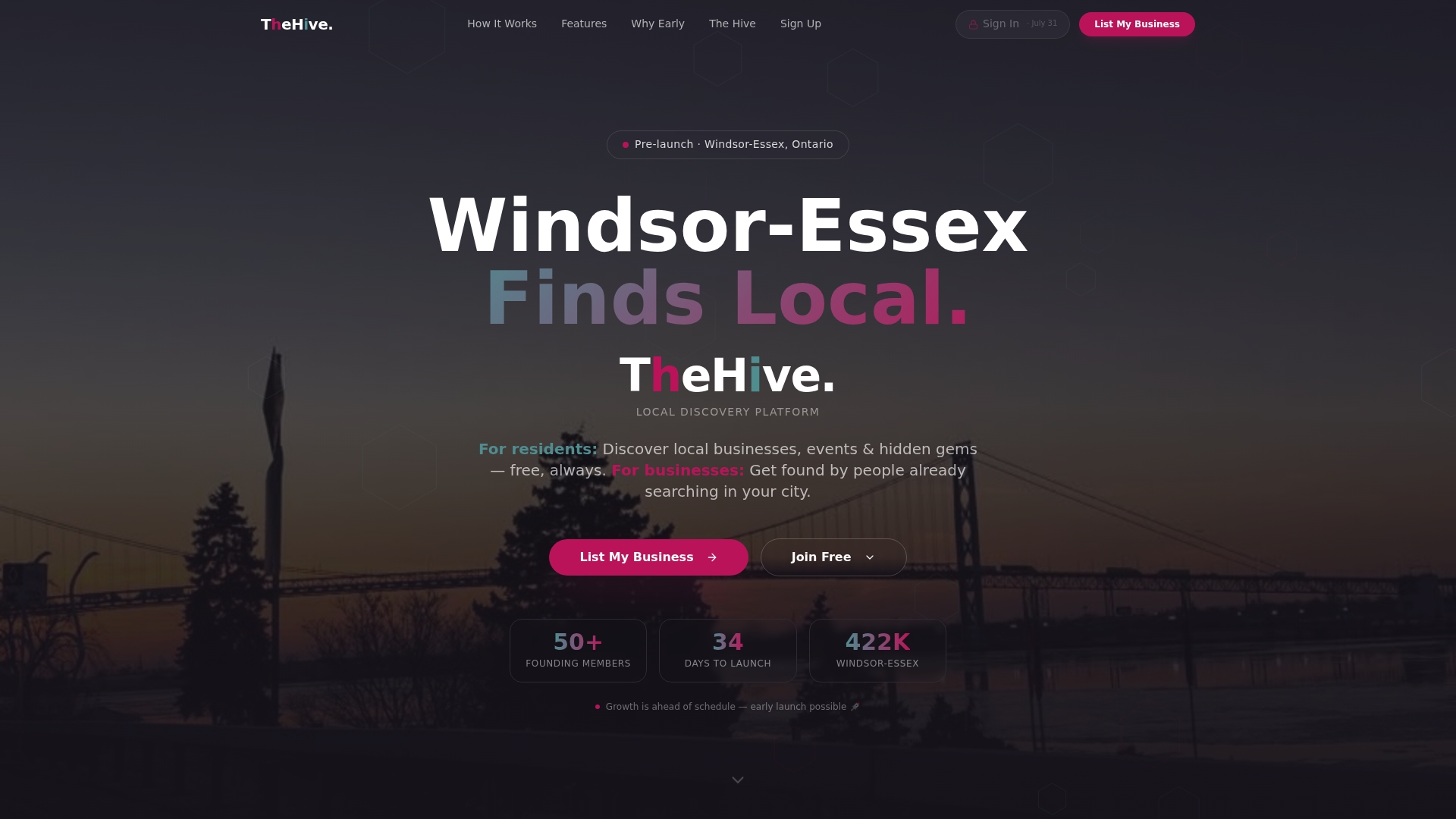
Thehivewindsor handles listing management, review collection, event listings, and optional consulting in one place, so you are not juggling five separate dashboards. The platform's zone-based map search connects residents directly to neighborhood businesses, and the referral rewards system turns your existing customers into active promoters.
Claim your listing or schedule a quick audit at Thehivewindsor and see how a 40-year business looks when its reputation is fully visible online.
Useful sources and further reading
- DreamHost — DreamHost 2026 Local Business Trust Index
- 27% of Local Businesses Have No Website in 2026, Here's Exactly What It's Costing Them | Atomix Digital
- Local Business Website Statistics: What the Data Shows (2026)
- Local SEO statistics — Shopify
- How digitally fluent small businesses are reshaping main street — PYMNTS
- Do You Need a Website for Your Small Business in 2026? (The Data Says Yes) | WebZum Blog
- How main street retailers should think about online presence — ShopAppy