
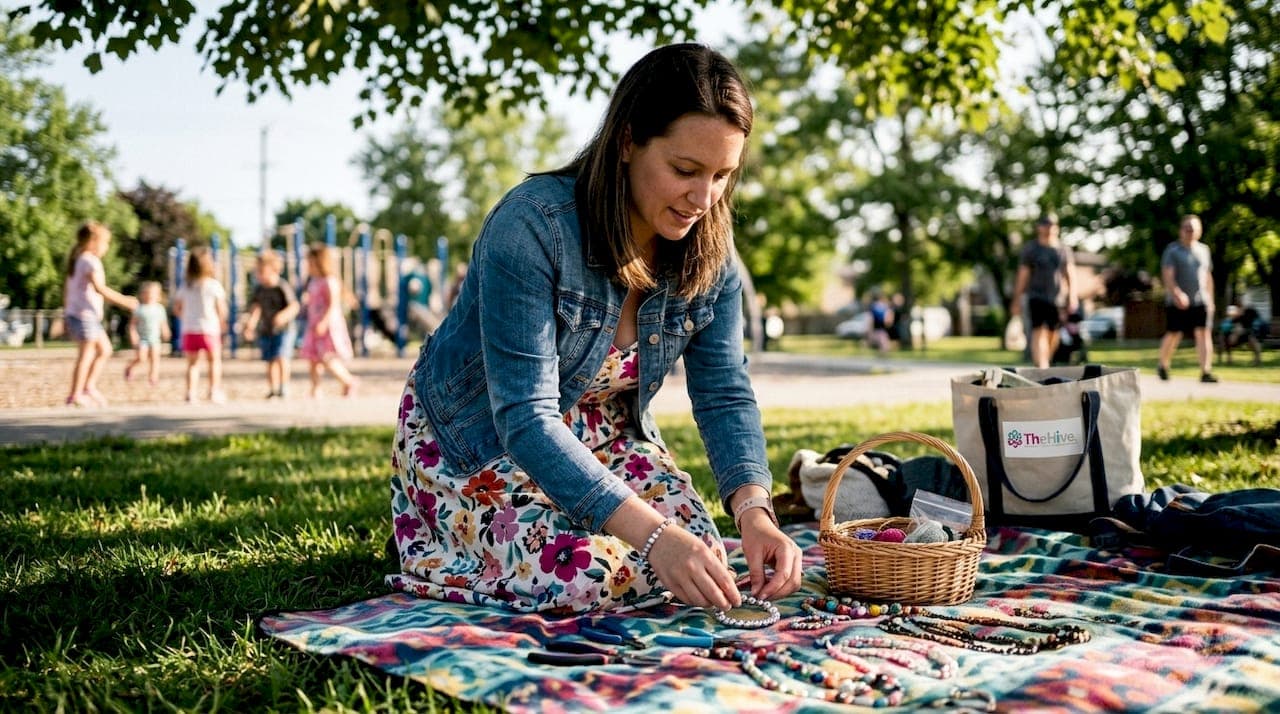
Local exposure for a hobby business is defined as the process of making your products or services visible to paying customers within your immediate geographic community. The most effective path combines in-person events, local digital communities, and search visibility built on real reviews rather than paid ads. Hobbyists who treat each customer interaction as a data point grow faster than those who simply post and hope. Platforms like Thehivewindsor exist precisely for this reason, connecting Windsor-Essex residents with local makers and sellers through a review-driven algorithm that puts community trust ahead of ad spend.
How hobby businesses gain local exposure through events and markets
Craft fairs, farmers markets, and pop-up events remain the fastest way for hobbyists to get real feedback from real buyers. No algorithm or ad campaign replicates the moment a stranger picks up your product, asks a question, and hands you cash. That transaction tells you more about pricing, packaging, and demand than months of online research.
The financial barrier is lower than most hobbyists expect. Craft market booth fees typically range from £30–80 per day, making a single weekend event one of the cheapest market tests available. That cost buys you direct access to your target neighborhood and immediate sales data you can act on the following week.
The smartest sellers treat each event as a data collection opportunity for pricing refinement, packaging, and customer contacts. Bring a simple sign-up sheet or a QR code linking to a contact form. Every email address you collect at a booth is worth more than a social media follower because you own that relationship.
Key actions to take at every local event:
- Set up a clear price display so buyers never have to ask
- Collect emails with a simple offer, such as a discount on the next purchase
- Note which products draw the most attention, even when people do not buy
- Ask at least five customers what they almost bought and why they hesitated
- Track your total sales against your booth fee to calculate real return
Pro Tip: Experts recommend starting with one event and one retail outlet before expanding to multiple channels. Spreading across five markets at once dilutes your energy and makes it impossible to measure what is actually working.
How can local social media groups boost visibility for hobby sellers?
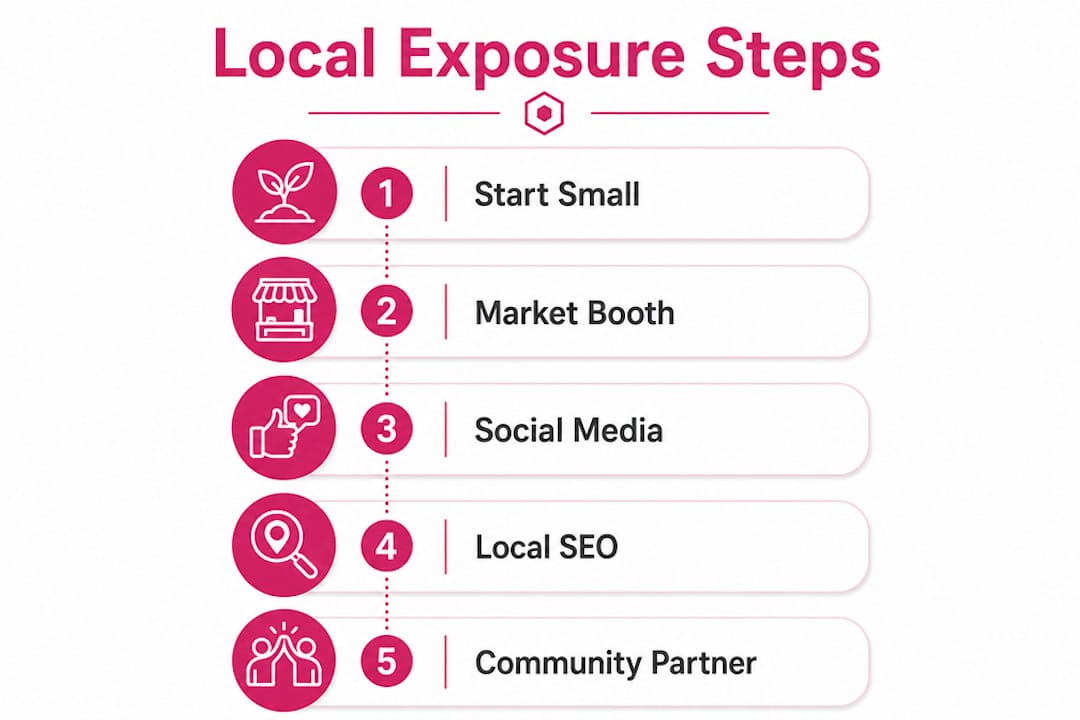
Local Facebook groups with around 3,000 members can outperform business pages with tens of thousands of followers for local retailers. The reason is proximity. Neighbors trust neighbors. A post in a local community group carries social weight that a branded page simply cannot replicate.
This concept is called community commerce, and it functions as a digital extension of your local storefront. When you post a photo of your hand-poured candles in a Windsor neighborhood group, you are not just advertising. You are participating in a conversation your potential customers are already having. That distinction changes how people respond.
Follow this posting sequence to build consistent visibility without burning out:
- Post 3–5 times per week, mixing product photos, behind-the-scenes content, and community questions
- Respond to every comment within two hours to signal that a real person is behind the account
- Use public comments to assess market interest and price sensitivity before committing to a product line
- Pin your best-performing post each month so new group members see your strongest content first
- Direct interested buyers to a simple landing page or direct message rather than a complex checkout process
The feedback loop in local groups is remarkably fast. Public comments reveal demand and objections within an hour of posting. That speed makes local groups a free market laboratory that no paid research tool can match.
Pro Tip: Avoid posting the same image twice in the same group. Reformat the content instead. A product photo becomes a process video, then a customer review post. Same product, three different angles, three times the reach.
What role does local SEO and press coverage play in hobby business visibility?
A completed Google Business Profile with photos, recent posts, and a full services list can outperform competitors in local search rankings without spending a dollar on ads. Most hobby businesses skip this step entirely, which means the bar for standing out is genuinely low. Claiming and completing your profile takes under an hour and pays dividends for years.
Local press coverage creates social proof that ads cannot buy. Press coverage ranks higher on the trust scale than online reviews, according to BrightLocal research. A single mention in a local newspaper or community blog signals legitimacy to customers who have never heard of you.
Backlinks from local news sites and geographically relevant blogs significantly boost local SEO authority. Search engines treat a link from a Windsor-Essex community site as a vote of confidence that your business belongs in local results. Volume of backlinks matters less than geographic relevance.
"Local press coverage is not just a vanity metric. It is a trust signal that converts skeptical first-time buyers into paying customers faster than any social media post. A single feature in a community newsletter can drive more qualified local traffic than weeks of paid promotion."
Practical steps to build local SEO and press presence:
- Claim and fully complete your Google Business Profile with at least five photos
- Pitch a story angle to local journalists that connects your hobby to a community trend
- Reach out to local podcasts and neighborhood blogs for guest features
- Get listed in local directories that carry geographic authority
- Update your profile with a new post or photo at least twice per month to signal active status
How to build community partnerships that sustain local exposure
Partnerships with complementary local businesses give hobbyists immediate, high-trust visibility that is hard to build alone. A candle maker partnering with a local gift shop reaches that shop's existing loyal customers on day one. That audience already trusts the shop, and that trust transfers to your product by association.
The mistake most hobbyists make is treating a retail pitch as a one-time ask. Treating retail partners as an annual pitching cycle rather than a single conversation increases the odds of landing consignment or wholesale opportunities. Store inventory needs shift with seasons and staff changes. The seller who follows up every year is the one who gets the call when a slot opens.
Pro Tip: When pitching a local shop, bring three products maximum and a one-page sheet showing your price, your wholesale rate, and one customer review. Busy shop owners make faster decisions with less information, not more.
The table below compares common partnership types by the type of exposure they generate and the effort required to establish them.
| Partnership type | Exposure benefit | Effort to establish |
|---|---|---|
| Consignment in local shop | Ongoing shelf presence with warm audience | Medium, requires product and follow-up |
| Co-hosted pop-up event | Direct sales and shared marketing reach | Medium, requires coordination |
| Community sponsorship | Brand name visibility at local events | Low effort, moderate cost |
| Cross-promotion with maker | Shared social audiences and referrals | Low, requires relationship building |
| Local co-op membership | Collective marketing and shared storefront | High setup, strong long-term return |
Community engagement for hobbies extends beyond selling. Sponsoring a local school fundraiser or donating a product to a charity auction puts your name in front of community members who may never have found you through search. That kind of community-driven visibility compounds over time because people remember generosity.
What first steps and pitfalls should hobby businesses avoid?
The single most common mistake hobby sellers make is investing in a website, business registration, and branded packaging before proving anyone will buy. Validating products by making five sales to strangers before investing in infrastructure avoids premature overhead and proves real demand exists. Friends and family buying your products does not count. Strangers paying full price does.
Once you have proven demand, the next trap is spreading across too many channels at once. A hobbyist posting on five platforms, attending three markets, and pitching ten shops simultaneously produces scattered results and burnout. Local visibility for small businesses grows faster through depth on fewer channels than through thin presence everywhere.
A practical launch checklist for local exposure:
- Make five sales to strangers at full price before spending on infrastructure
- Choose one in-person event and one digital channel to start
- Set a weekly time budget for posting and responding to comments
- Track revenue from each channel monthly to identify what is worth scaling
- Collect at least ten customer emails before investing in any paid promotion
Pro Tip: Measure your hourly return on each channel. If a farmers market earns you $120 in four hours and your Facebook group earns $40 in two hours of posting, the math tells you where to focus next month.
The local business visibility principles that work for established businesses apply equally to hobbyists starting out. Start with proof of concept, build one channel well, then expand with data behind every decision.
Key Takeaways
Hobby businesses gain lasting local exposure by combining in-person market validation, consistent local digital engagement, and community partnerships built on trust rather than ad spend.
| Point | Details |
|---|---|
| Validate before investing | Make five sales to strangers at full price before spending on websites or branding. |
| Start with one channel | Master one event and one digital platform before expanding to avoid burnout. |
| Local groups outperform pages | A 3,000-member local Facebook group drives more sales than a 40,000-follower business page. |
| Press builds trust fast | A single local press mention converts skeptical buyers faster than weeks of social posting. |
| Partnerships compound over time | Annual follow-ups with retail partners increase consignment opportunities as store needs shift. |
What I have learned watching local hobby businesses grow
The hobbyists who gain real traction in their communities share one trait: they show up consistently before they feel ready. They book the booth when they only have six products. They post in the local group before they have a logo. That willingness to be visible before everything is polished is what separates the sellers who build something real from those who spend months preparing and never launch.
The digital-physical balance matters more than most guides admit. A strong presence in a local Facebook group drives people to your booth. Your booth drives people to your profile. Each channel feeds the other, but only if you are active in both. Hobbyists who go all-in on one and ignore the other hit a ceiling quickly.
Local feedback is also underrated as a business tool. The customer who tells you your price is too high at a craft fair is giving you market research for free. The comment in a neighborhood group asking "do you ship?" tells you there is demand beyond your immediate area. Paying attention to those signals and adjusting quickly is what turns a hobby into a real side income.
My honest advice is to treat Thehivewindsor as your home base for local discovery. The platform surfaces businesses based on community reviews and genuine engagement rather than who spent the most on ads. For a hobbyist with a great product and zero marketing budget, that is a meaningful advantage.
— randy
Thehivewindsor puts your hobby business in front of Windsor-Essex
Hobby businesses in Windsor-Essex now have a direct path to local customers without buying ad space or competing against large marketing budgets. Thehivewindsor is a local discovery platform built for exactly this situation. Its algorithm ranks listings by community reviews and genuine engagement, not by who paid the most to appear first.
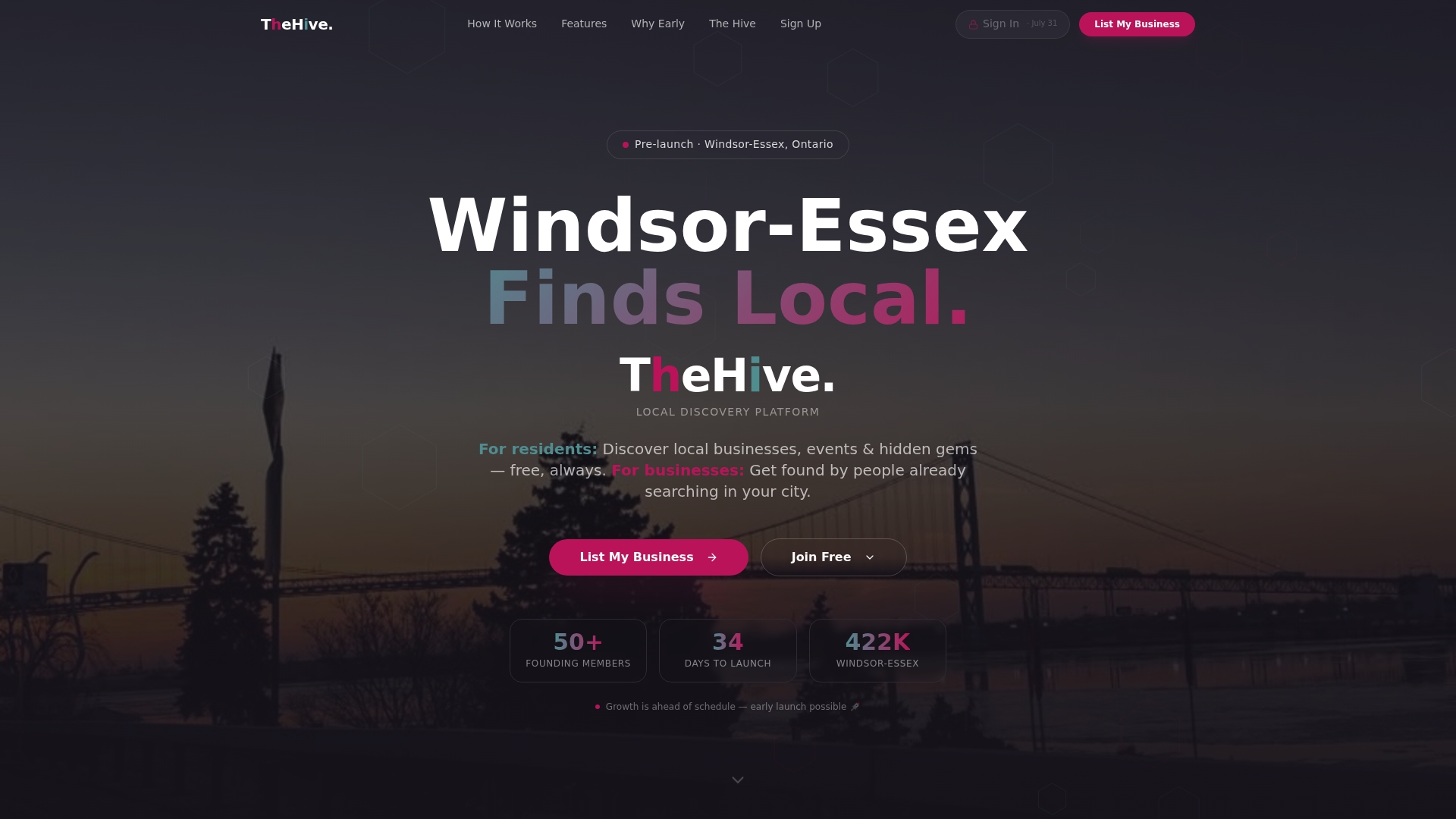
Whether you make jewelry, offer pet grooming, bake custom cakes, or teach guitar lessons, a free listing on Thehivewindsor puts your business in front of neighbors who are actively searching for local options. The platform covers everything happening in Windsor-Essex in one place, so your customers do not have to hunt across multiple apps to find you. Create your listing and let the community do the rest.
FAQ
How do hobby businesses gain local exposure without paid ads?
The most effective no-cost methods are participating in local craft markets, posting consistently in local Facebook groups, and completing a Google Business Profile. Community reviews and word-of-mouth referrals drive more trust than paid placements for small-scale sellers.
What is the best first step for a hobbyist starting to sell locally?
Make five sales to strangers at full price before investing in a website or business registration. That threshold proves real demand exists and prevents premature spending on infrastructure.
How often should hobby sellers post in local social media groups?
Posting 3–5 times per week in local community groups maintains visibility without triggering mute responses from group members. Mix product photos, process content, and community questions to keep the feed varied.
Does local press coverage actually help a hobby business?
Local press coverage ranks higher on consumer trust scales than online reviews, according to BrightLocal research. A single feature in a community newsletter or local blog can drive more qualified local traffic than weeks of social media activity.
How does Thehivewindsor help hobby businesses get discovered locally?
Thehivewindsor lists hobby businesses and local sellers in a single Windsor-Essex discovery platform ranked by community reviews rather than ad spend. Hobbyists with strong local reputations appear above larger businesses that simply outspend them.