
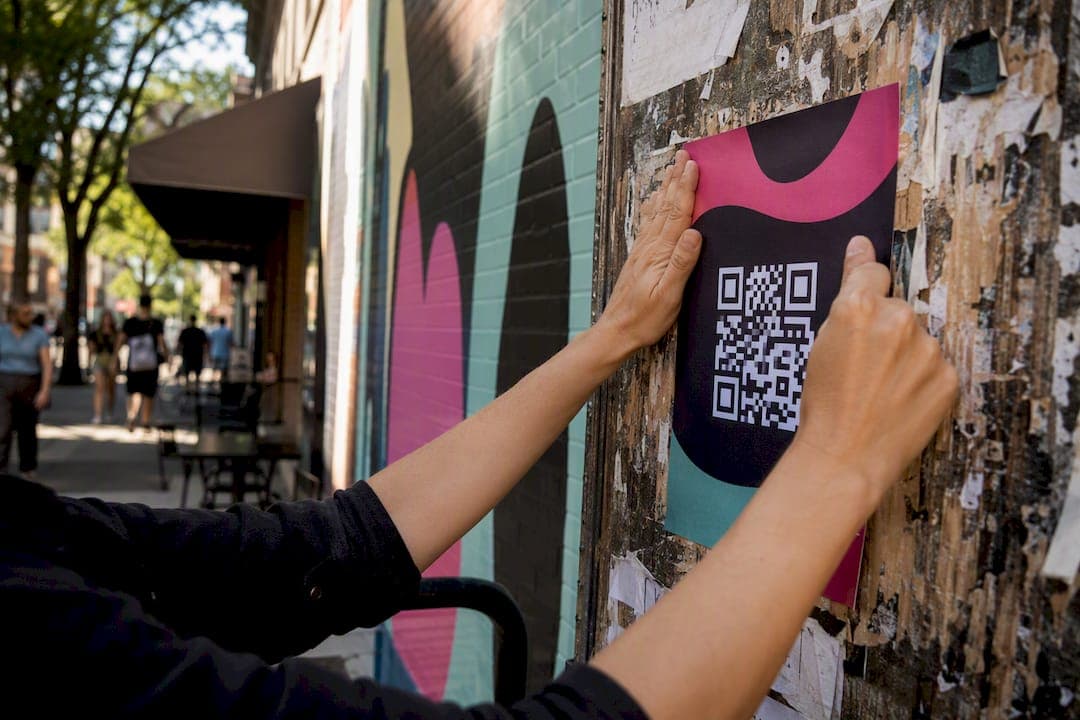
Publish one canonical, mobile-first event page with clear name, date, venue, and ticket link, then add Event schema so search engines and AI tools can read it. List that page on Google Business Profile, Apple Maps, local calendars, and theHive so nearby searchers can actually find it. Everything else, geo-targeted ads, social pushes, partner shares, exists to funnel people back to that one page.
TL;DR:
- Creating a single, well-structured event page with accurate details and schema markup is essential for search visibility and recommendations.
- Listing the event on local maps, directories, and community platforms with consistent information prevents attendee confusion and increases reach.
- Social media and partner networks should be used to generate local buzz, with geotagging and targeting to boost engagement and sharing.
- Map ads and local search campaigns pay off most when focused on nearby, transit-accessible areas and timed during peak planning hours.
- Post-event efforts like tracking conversions, collecting reviews, and maintaining active profiles support future promotion and organic discoverability.
Table of Contents
- What is the 48-hour checklist for event SEO in Windsor?
- How do you structure an SEO-friendly event landing page?
- Where should you list your Windsor event for maximum visibility?
- What social and partnership tactics actually drive attendance?
- When do map ads and paid local search actually pay off?
- What should you measure and do after the event ends?
- Randy's local take: community-first promotion for Windsor-Essex
- How theHive helps Windsor-Essex organizers get discovered without ad spend
- Sources
What is the 48-hour checklist for event SEO in Windsor?
Before you touch ads or social posts, lock down the basics. Local organizers who skip this step end up with three different ticket links floating around and no idea which one actually converts.
- Create one canonical event URL and fill it with the name, date, time, venue, and a working ticket link above the fold.
- Add Event JSON-LD schema and embed a Google Map pin at the venue address.
- Claim or update your Google Business Profile and your theHive listing with matching details.
- Submit the event to two to four local calendars and a ticketing platform like TicketLeap.
- Set up a Facebook event page and prepare two or three geotagged social posts.
- Confirm with local businesses that they'll cross-post and link back to your event page.
- Decide if a small, dayparted paid push makes sense given your budget and timeline.
For a smaller neighborhood event, free channels like email lists, partner networks, and community calendars are often enough to fill seats without spending a cent on ads. Save the paid push for events that need a bigger radius or a faster ramp.
How do you structure an SEO-friendly event landing page?
Your event page is the single source of truth. Every other listing, Google Business Profile, Facebook, TicketLeap, theHive, should point back to it, and every detail on it should match exactly what appears everywhere else.
- Lead with the essentials. Event name (with a natural local reference, like "Windsor" or the neighborhood), start and end time, venue name and address, ticket link, and organizer contact.
- Add Event schema markup. Structured JSON-LD with organizer, offers, location, startDate, endDate, and ticketUrl fields helps your page surface in map and AI-driven recommendations, since pages with complete Event schema and multiple aggregator listings get recommended more often than pages without it.
- Keep logistics above the fold. Date, time, and the ticket button should be visible before anyone scrolls, and the checkout flow should take three taps or fewer on a phone.
- Embed a map and add a transit note. A short line about parking, transit access, or ADA accommodations answers the question people actually search for.
- Use a stable URL. Don't recreate the page every year. Keep one canonical link and update it, so old shares and backlinks keep working.
Pro Tip: Write your event name the way a local would search for it, "Live Music Night Downtown Windsor" beats "Q2 Community Engagement Event" every time, in both rankings and reader comprehension.
Where should you list your Windsor event for maximum visibility?
Discovery surfaces aren't optional extras. Each one captures a different kind of local search intent, and skipping any of them leaves attendees on the table.
- Maps and profile listings. A well-maintained Google Business Profile and accurate Apple Maps listing catch people searching "things to do near me" right when that intent forms, and Google Business Profile also gives you direction requests and call data you can't get anywhere else.
- City and tourism calendars. These reach people actively browsing for neighborhood activities rather than searching for your event by name.
- Ticketing platforms and aggregators. Tools like TicketLeap can surface your Event schema automatically, extending your reach without extra manual work.
- theHive. As a Windsor-Essex-first discovery platform, theHive ranks listings by community reviews and engagement rather than ad spend, which matters if you're a small organizer competing against bigger budgets.
Whatever surfaces you choose, cross-check the name, date, venue, and ticket link on every single one. A mismatched date on one calendar can quietly cost you attendees who trusted the wrong listing.
What social and partnership tactics actually drive attendance?
Set up a Facebook event and keep the ticket link visible in the description, not buried in a comment. Use localized hashtags, geotag your posts, and tag the accounts of any venues or partners involved, they're far more likely to reshare something that mentions them directly.
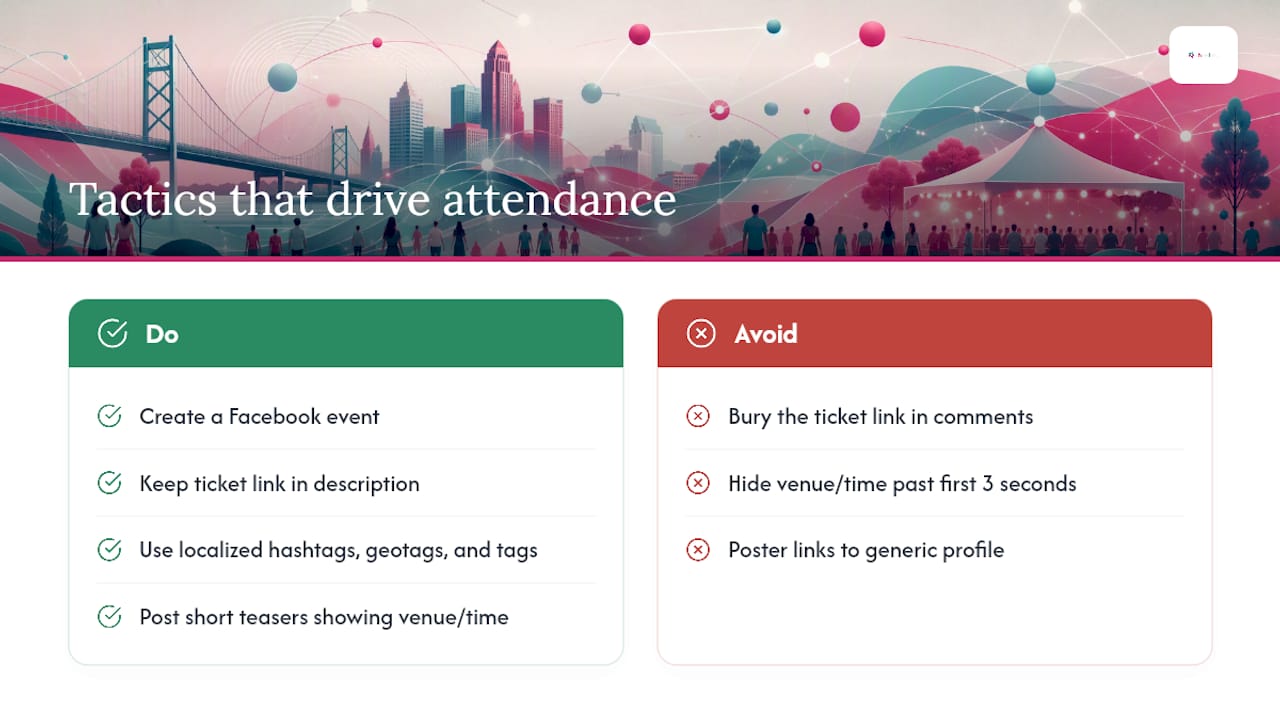
Short video teasers work best when they show the venue and time in the first three seconds; nobody waits ten seconds to find out where something is happening. Offer a free preview or early access to a local reporter or micro-influencer in exchange for coverage and a link back to your event page, that's a fair trade and it builds the kind of backlink profile that helps future events too. On the ground, ask nearby cafes and shops to display a QR-coded poster pointing straight to your canonical event page rather than a generic social profile.
When do map ads and paid local search actually pay off?
Map-based ads work because they meet people at the exact moment local intent is forming, someone searching "events near me" tonight is a warmer lead than someone scrolling a feed ad three weeks out.
- Set your attendance radius around realistic transit and parking limits, not an arbitrary city-wide boundary.
- Daypart your ads for commute hours, after-work browsing, and weekend planning windows, when people actually decide what they're doing.
- Put your budget into map placements and local search rather than broad awareness campaigns.
- Check performance daily during the run-up; local ad windows close fast and underperforming placements need quick adjustment.
For creator-run or small community events, pairing map ads with nearby organic posts creates a tighter, more efficient path from discovery to ticket than either tactic alone.
What should you measure and do after the event ends?
Track listing views, clicks to your ticket page, direction requests, RSVPs, and your overall conversion rate, that's the minimum data set to know whether your promotion actually worked. Collect social mentions and photos during the event itself; they become your recap content almost for free.
- Publish a post-event recap page with photos, standout moments, and any testimonials within a few days.
- Keep the event page live rather than deleting it, since indexed past-event pages with recaps help build the authority that makes your next event easier to promote.
- Ask attendees for reviews on Google and theHive; these compound into stronger visibility for future listings.
- Turn partner mentions into permanent backlinks and ask cross-promoters for a recap share.
A Google Business Profile that stays active with post-event updates keeps generating direction requests long after the event wraps, which matters if you're planning a recurring series rather than a one-off.
Randy's local take: community-first promotion for Windsor-Essex
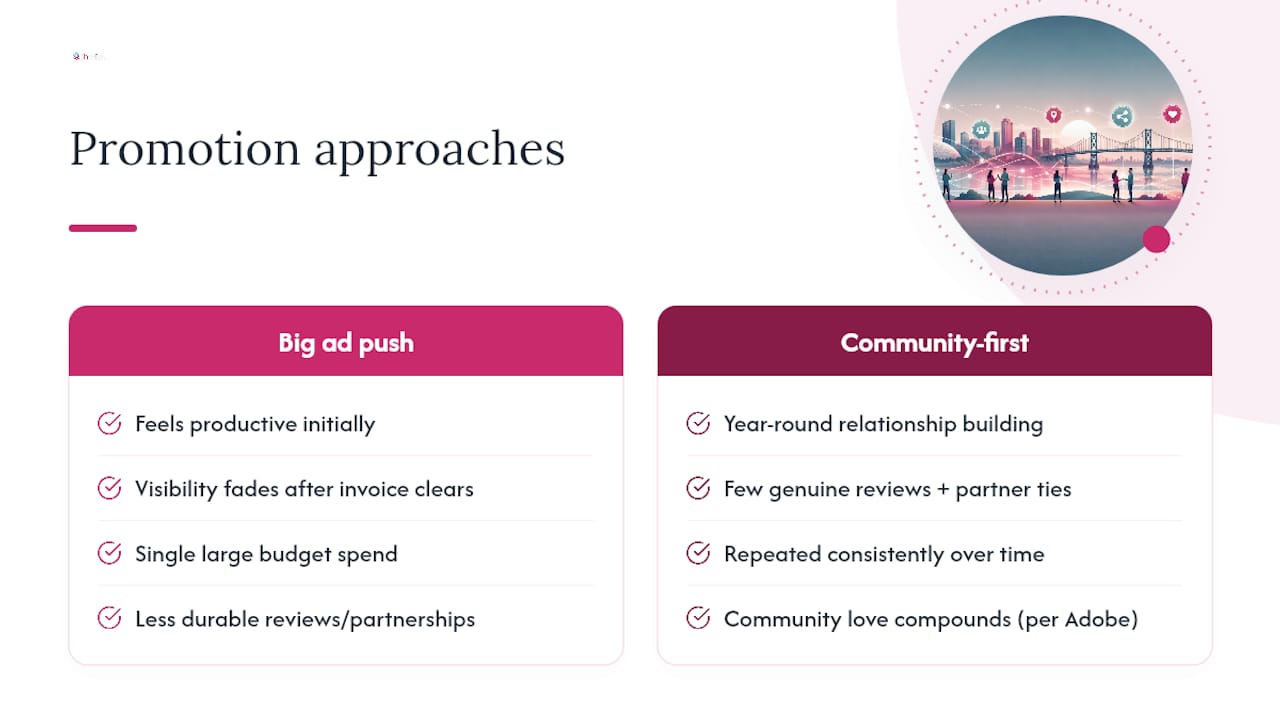
Most organizers treat every event like it starts from zero. Wrong move. The smarter play is building a year-round relationship with your local audience, through partner cross-promotions, community content, and consistent engagement, so that launching any specific event becomes dramatically easier, a point Adobe's own event marketing research backs up.
One big ad push feels productive, but a handful of genuine reviews and a few reliable partner relationships, repeated consistently, outperform it over time. That's the whole logic behind how theHive ranks listings: community love compounds, ad budgets don't stick around after the invoice clears.
— randy
How theHive helps Windsor-Essex organizers get discovered without ad spend
theHive is the alternative to paid promotion for event visibility in Windsor-Essex: instead of bidding for placement, your listing rises based on real reviews and community engagement, not who spent the most. That matters if you're a solo organizer or small business competing against events with marketing budgets ten times yours.
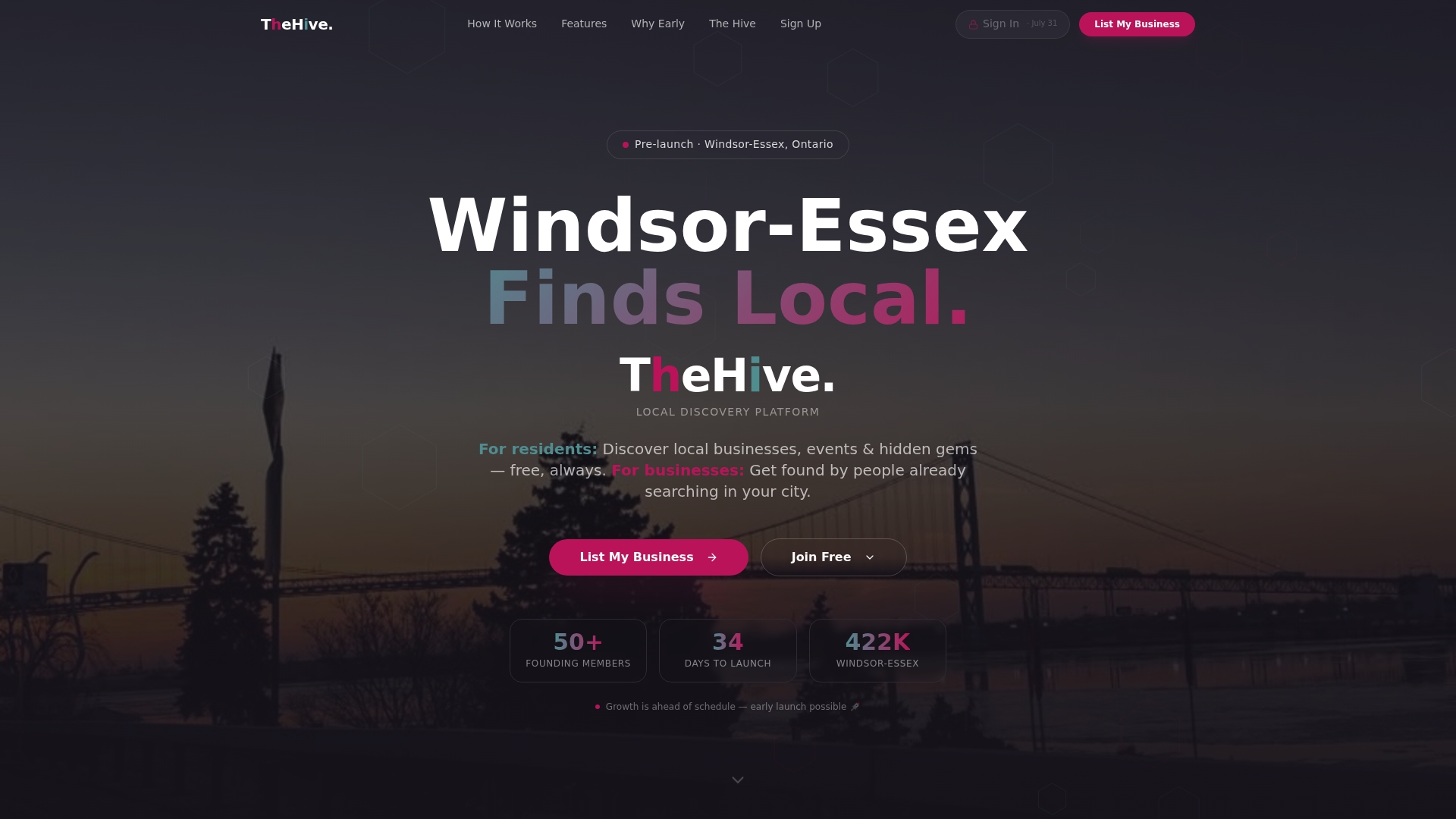
Getting started takes three steps: claim your listing, add your event with the same details you used on your canonical page, and invite the partners and attendees who already know you to leave a review. Every review and cross-promotion feeds the same ranking signal that gets your next event seen sooner. Sign up and add your first event to see how theHive's listing tools work for organizers your size.
Sources
- Local Event Marketing: The Ultimate Guide | TicketLeap
- A comprehensive guide to community event marketing | Adobe
- GEO for Events and Conferences: How to Get Recommended by AI
- Apple Maps ads for event promoters: Local discovery
- Local Event Marketing: Filling Seats on a Budget