
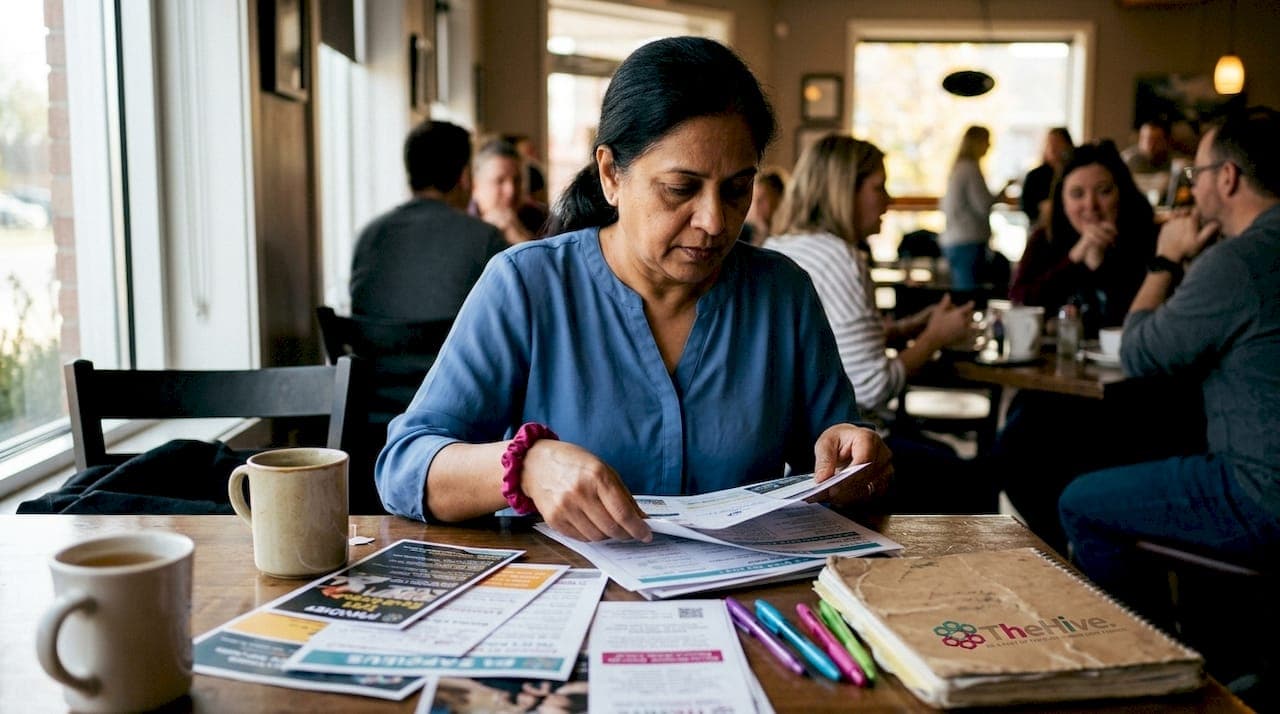
Local event promotion is the process of marketing community events through coordinated digital and physical channels to build awareness and drive attendance. For Windsor-Essex organizers and local business owners, getting this right means the difference between a packed room and an empty one. The good news is that effective community event promotion does not require a large ad budget. It requires a structured plan, the right channels, and consistent execution across a 4–6 week window before your event date.
What are the essential channels for local event promotion?
The most effective local event marketing strategies combine free digital tools with physical outreach. No single channel wins alone. The organizers who fill seats use both.
Digital foundations are where you start. Facebook Events and Google Business Profiles are non-negotiable for any Windsor-Essex event. Both are free, indexed by search engines, and trusted by local audiences. Submitting your event to community calendars, including those run by local newspapers and neighborhood websites, costs nothing and puts your event in front of people who are actively looking for things to do.
Physical marketing still works, especially in tight-knit communities like Windsor-Essex. Flyers in coffee shops, laundromats, and community centers reach people who are not scrolling social media. QR codes on print materials bridge the gap between offline and online, sending anyone who scans directly to your event page or registration link. That connection between physical and digital is where a lot of organizers leave attendance on the table.
Organic social media content performs best when it uses local hashtags and speaks directly to the community. Posting in local Facebook groups and neighborhood platforms like Nextdoor puts your event in front of people who already care about what is happening in their area. These warm audiences convert far better than cold ad impressions.
The most underused tactic in local event advertising is the personal invitation. Personalized messages to 15–20 people convert 3–5 times better than mass social media announcements. That means a direct text or DM to someone you know is worth more than a post seen by thousands of strangers. Start with your warmest contacts and work outward.
Pro Tip: Build a short list of 15–20 people who would genuinely benefit from your event. Text or DM each one personally before you post publicly. Those early RSVPs create social proof that pulls in the next wave of attendees.
How can organizers plan an effective promotion timeline?
A structured timeline is the backbone of any successful local event marketing strategy. Without one, promotion becomes reactive and inconsistent. The recommended framework runs 6 weeks out from your event date.
-
Week 6: Create your event page. Set up your Facebook Event, Google Business Profile post, and any ticketing page. Write a clear description that answers who, what, where, when, and why someone should attend. This page becomes the hub for all your other promotion.
-
Week 5: Make the announcement. Send your first email to your list, post in local Facebook groups, and share on your social channels. Focus on the core value of the event, not just the logistics. Tell people what they will walk away with.
-
Week 4: Deliver value messaging. Share content that builds anticipation. Post speaker bios, behind-the-scenes photos, or a short video about what to expect. This is also the week to reach out to community partners and ask them to share the event with their audiences.
-
Week 3: Activate partners. Follow up with any sponsors or collaborators. Ask local businesses, neighborhood groups, and community organizations to post about the event. A shared post from a trusted local business carries more weight than a paid ad.
-
Week 2: Build urgency. Highlight registration deadlines, limited spots, or early-bird pricing if applicable. Post reminders across all channels. This is also the right time to send a second personal outreach wave to anyone who has not yet responded.
-
Week 1 and event day: Final push. Send a reminder email 48 hours before the event. Post a day-of update with parking, timing, and what to bring. Keep energy high and make it easy for people to share the event with friends.
Pro Tip: Your email list is your most reliable channel. Even a small list of 100 local subscribers outperforms a Facebook post to 1,000 followers because email lands directly in the inbox without an algorithm deciding who sees it.
| Week | Primary Focus | Key Action |
|---|---|---|
| Week 6 | Setup | Create event page and registration link |
| Week 5 | Announcement | Email list, social posts, local group shares |
| Week 4 | Value content | Speaker previews, partner outreach |
| Week 3 | Partner activation | Collaborators share to their audiences |
| Week 2 | Urgency | Reminders, personal follow-ups |
| Week 1 | Final push | 48-hour email, day-of social updates |
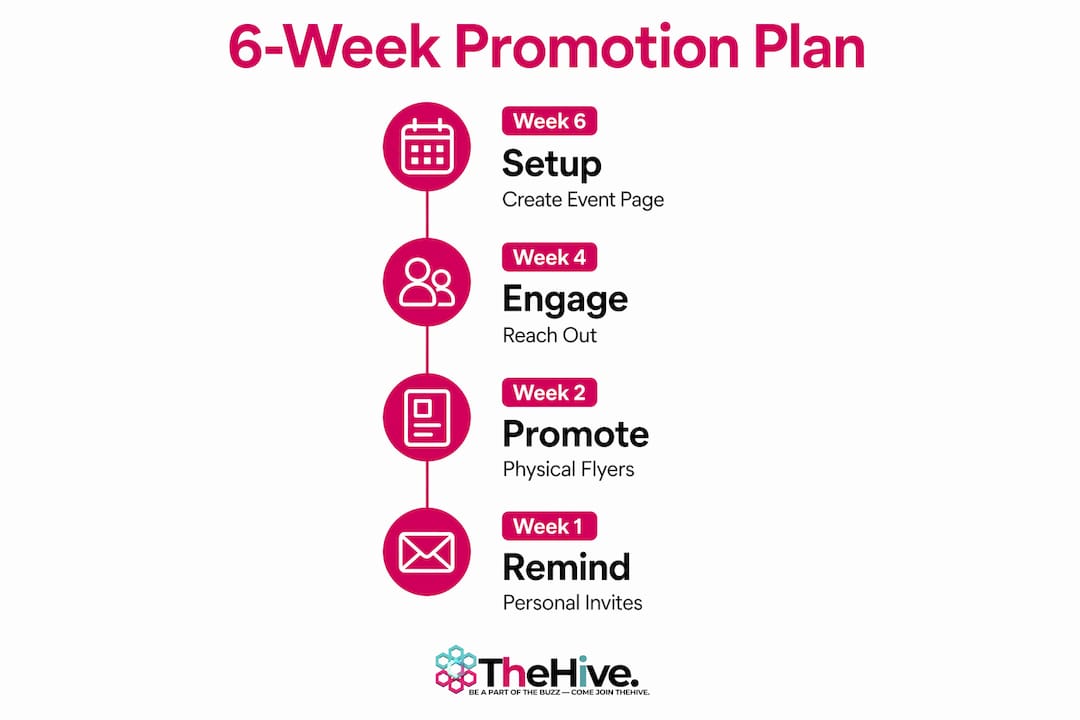
A 6-week promotion plan builds momentum gradually rather than dumping all your promotion into the final week. Small paid local ads in the $50–$150 range can amplify reach during weeks 2 and 3 if your budget allows, but they are optional. The organic strategy works on its own.
What are the best practices for zero-budget community promotion?
Zero-budget promotion is not a compromise. For Windsor-Essex events, warm community channels consistently outperform broader paid advertising when used correctly. The key is knowing where your audience already gathers and showing up there.
- Local Facebook groups are the most direct free channel in Windsor-Essex. Groups organized around neighborhoods, hobbies, parenting, and local business all have members who want to know what is happening nearby. Post in groups where your event is genuinely relevant, and always follow group rules about promotional content.
- Community calendars at local newspapers and municipal websites are free to submit to and reach readers who are specifically looking for local events. Submit at least 3 weeks in advance.
- Nextdoor and neighborhood apps reach hyperlocal audiences who are often missed by broader social platforms. These platforms work especially well for events tied to a specific neighborhood or community space.
- Personal invitations remain the highest-converting tactic. A direct text or DM to someone you know takes 30 seconds and produces results that no algorithm can match.
- Local influencers are community personalities with trusted followings, not celebrities. Offering complimentary access to a local blogger, podcast host, or active community member generates authentic coverage that cold ads cannot replicate.
Media outreach is another free tactic that most organizers skip because they assume it will not work for a small event. The secret is the angle. A corporate-sounding press release gets ignored. A human story gets picked up.
"We started this event with 30 people in a church basement. This year we are aiming for 300. That growth happened because Windsor-Essex showed up for each other." A quote like that gives a local reporter a clear story lead and a reason to cover your event rather than file your email in the trash.
Repetition matters more than most organizers realize. Posting about your event once and waiting is not a strategy. Post multiple times across different channels, vary the format (photo one day, video the next, a quote the day after), and keep showing up in people's feeds until the event date arrives.
How can sponsorship and local partnerships boost your reach?
Sponsorship delivers the best return when it goes beyond logo placement. A speaking slot or branded experience gives a sponsor something tangible to promote to their own audience, which means they actively share your event rather than passively attach their name to it. That distinction matters enormously for reach.
When approaching local partners, focus on alignment over size. A small Windsor-Essex business with a loyal following is a better partner than a large brand with no local connection. The right partner shares your event because their audience genuinely cares about it.
- Identify partners whose audience matches your attendees. A fitness studio, a local bookshop, or a specialty food vendor all have customers who might love your event. Approach them with a specific value offer, not just a request to share a post.
- Offer educational or interactive sponsorship formats. A local business running a short workshop or demo at your event gets far more value than a banner on the wall. That value motivates them to promote the event heavily in advance.
- Ask partners to share in their own voice. A partner posting "We are excited to be part of this" to their own audience carries more credibility than a repost of your flyer. Give them talking points and let them personalize the message.
Local influencers have outsized impact because their audiences trust their recommendations. Engaging them should be genuine, not transactional. Invite them as guests, give them early access, and let them share their honest experience.
Pro Tip: When you approach a local business about partnering, lead with what they get, not what you need. "Your customers would love this event, and we would love to feature your brand during the session" lands better than "Can you share our post?"
Key Takeaways
Effective local event promotion combines a structured 6-week timeline, warm community channels, and personal outreach to consistently outperform paid advertising in Windsor-Essex.
| Point | Details |
|---|---|
| Start 6 weeks out | Build momentum gradually with a week-by-week plan from announcement to final push. |
| Personal outreach wins | Direct texts or DMs to 15–20 people convert 3–5 times better than mass social posts. |
| Use free community channels | Local Facebook groups, Nextdoor, and community calendars reach warm audiences at zero cost. |
| Make sponsorships interactive | Branded workshops or demos motivate partners to actively promote your event to their audience. |
| Follow up after the event | Thank-you notes and recap content turn one-time attendees into repeat participants. |
What I have learned about promotion and community trust
Most organizers treat event promotion as a task to complete before the event and forget about the moment it ends. That is the biggest missed opportunity in local event marketing. The follow-up is where the real relationship begins.
After every event, structured follow-up converts attendees into long-term customers and community members. A thank-you email sent within 48 hours, a recap photo posted to social media, and a short survey asking what people loved all signal that you care about more than just ticket sales. Windsor-Essex is a community where word travels fast. People remember how an event made them feel, and they talk about it.
The organizers I have seen build real traction here are not the ones with the biggest budgets. They are the ones who show up consistently, treat every attendee like a person worth knowing, and think about the next event before the current one is even over. Promotion is not a campaign. It is a relationship you are building one event at a time.
— randy
Thehivewindsor makes local event discovery easier
Windsor-Essex event organizers no longer need to scatter their promotion across a dozen different platforms and hope the right people see it. Thehivewindsor is built specifically for this community, with a local discovery platform that surfaces events and businesses based on community reviews and genuine engagement rather than ad spend.
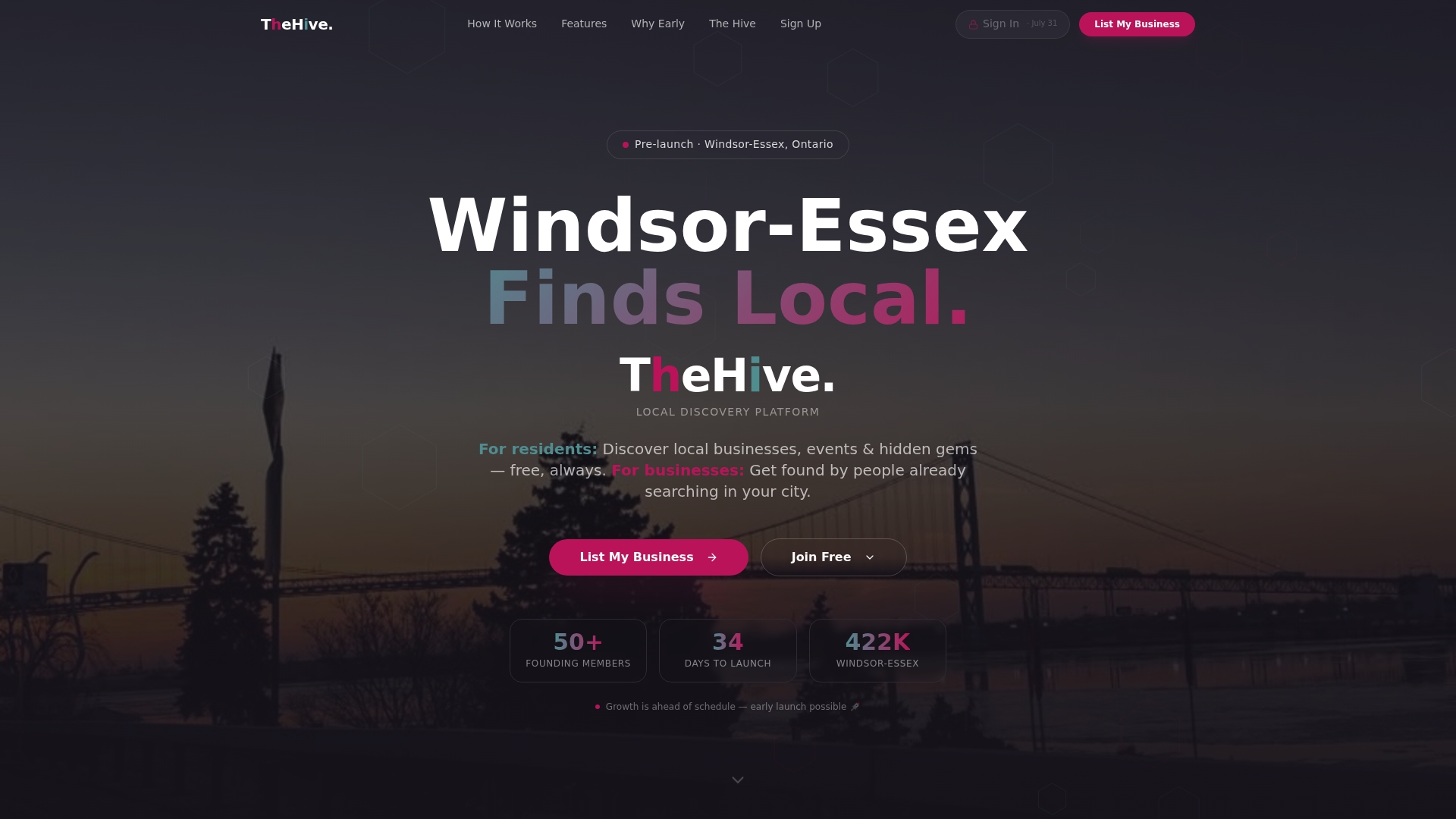
Whether you are running a neighborhood market, a business launch, or a community fundraiser, listing your event on Thehivewindsor puts it in front of Windsor-Essex residents who are actively looking for local things to do. The platform's algorithm rewards real community love, not paid placement, so every organizer gets a fair shot at visibility. Sign up and list your event to reach the Windsor-Essex audience you have been working to find.
FAQ
What is local event promotion?
Local event promotion is a structured marketing strategy that uses digital and physical channels to build awareness and drive attendance for community events. It typically combines social media, personal outreach, flyers, and community calendars to reach a local audience.
How far in advance should I start promoting a local event?
The recommended timeline is 4–6 weeks before the event date. Starting 6 weeks out gives you time to build momentum, involve community partners, and send multiple rounds of reminders without overwhelming your audience.
Do personal invitations really outperform social media posts?
Personal invitations via text or direct message convert 3–5 times better than mass social media announcements for local events. Targeting 15–20 individuals with a personalized message produces significantly higher attendance than a single public post.
How do I get local media to cover my event?
Lead with a human-interest angle and include an authentic quote that gives reporters a clear story. A quote like "We started with 30 people; this year we are aiming for 300" is far more compelling than a standard press release.
How can Thehivewindsor help me promote my event in Windsor-Essex?
Thehivewindsor is a community discovery platform that lists local events and businesses for Windsor-Essex residents. Events are ranked by community engagement rather than ad spend, giving every organizer equal visibility without a paid promotion budget.