

One consolidated, community-driven local app cuts missed leads, gives fair discovery to businesses that don't buy ads, and keeps more value circulating in Windsor-Essex instead of leaking to disconnected platforms. That's the whole argument, and everything below just proves it.
Here's what changes when residents, creators, and businesses stop juggling five apps for one neighborhood:
- Fewer missed leads. Listings, events, and referrals live in one searchable place instead of scattered across five apps.
- Fair discovery. theHive Windsor ranks businesses by community reviews and engagement, not ad spend.
- Time back. One profile to update beats five.
- Local value stays local. Directory research shows structured local listings are becoming more valuable for AI-driven search heading into 2026, which rewards towns that consolidate rather than fragment their data.
Key Takeaways
Consolidated, community-driven local apps reduce missed leads, restore fair visibility for small businesses, and keep more commercial value inside the local economy.
| Point | Details |
|---|---|
| Fragmented apps lose leads | Manual reconciliation across separate listing, event, and messaging tools causes missed bookings and messy reporting. |
| Essential features beat bloat | Unified listings, events, reviews, and map search matter more than extra modules attendees rarely use. |
| Community capital lowers acquisition cost | Local referral networks reduce what businesses spend to win each new customer compared with cold outreach. |
| Local networks show measurable gains | Town-built local networks have reported substantial local commerce gains and new local jobs in year one. |
| theHive Windsor consolidates the whole stack | Listings, events, referrals, and networking sit in one platform ranked by community reviews, not ad spend. |
Table of Contents
- Why Consolidated Local Apps Matter to Different People
- What Happens When Local Apps Don't Talk to Each Other?
- What Features Should a Consolidated Local App Actually Have?
- How Do You Know If a Local Platform Is Worth Joining?
- How Do You Get Real Value From a Local App Fast?
- What Does Consolidation Actually Do for a Local Economy?
- A Different Take on What "Consolidation" Really Fixes
- How theHive Windsor Puts This Into Practice
- Frequently Asked Questions
- Sources
Why Consolidated Local Apps Matter to Different People
The benefit shifts depending on who you are, but the underlying mechanic is the same: less searching, more finding.
Residents get one place to check for a Saturday farmers market, a plumber with real reviews, or a food truck rally happening three streets over. Instead of checking a town Facebook group, a separate events calendar, and a business directory app, you check one feed and trust that the reviews on it are real, not paid placements.
Creators and freelancers get visibility they'd otherwise have to build themselves across four platforms. A wedding photographer in Kingsville can post portfolio work, list availability for gigs, and pick up referrals from other vendors on the same platform, instead of maintaining an Instagram, a separate booking app, and cold-emailing venues. Referral tracking that lives inside the same app where the booking happened is far easier to follow than a text message from three weeks ago that got buried.

Local businesses get something closer to fair treatment. A neighborhood café that gets consistently good reviews and word-of-mouth outranks a chain competitor with a bigger ad budget, because ranking follows community appreciation rather than paid promotion. That structure also builds what local-growth researchers call community capital, the durable trust and referral network that lowers what a business spends to win each new customer. A tradesperson who shows up reliably and gets rated well ends up with repeat work through referrals alone, something a paid ad campaign rarely produces on its own.
What Happens When Local Apps Don't Talk to Each Other?
Fragmented apps break data flows, and broken data flow means real bookings and leads fall through the cracks. When your event ticketing lives in one app, your business listing lives in another, and your customer messages live in a third, nothing reconciles automatically. As technical teams working on local platforms describe it, this is the integration imperative: without automatic data sharing across tools, someone has to manually stitch the pieces together, and manual work always drops something.
Here's how the breakdown typically happens:
- A customer messages a business through a directory app, but the business checks a different inbox and never sees it.
- An event gets listed on a ticketing platform but never syncs to the local events calendar, so half the audience never finds it.
- A referral happens verbally or through a review, but nothing tracks it back to a source, so the business has no idea what's working.
The practical cost shows up as missed bookings, messy month-end reporting, and hours spent manually copying leads between spreadsheets and apps that were never designed to share data.
Pro Tip: If you're managing a business across three or more separate apps right now, count how many hours a week go into copying the same information between them. That number usually settles the debate on consolidation fast.
What Features Should a Consolidated Local App Actually Have?
Not every feature carries equal weight. Some are the whole point of consolidating; others are nice extras.
Essential features:
- Unified listings — one business profile instead of five half-finished ones.
- Events calendar — every local event in one searchable feed, not spread across ticketing sites and social posts.
- Reviews and ratings — real community feedback that drives ranking, not a pay-to-play algorithm.
- Map or zone search — find nearby services with one filter instead of scrolling an endless list.
- Lead tracking and analytics — see where inquiries actually come from.
Nice-to-have but valuable:
- Referral and networking tools for creators and freelancers to connect with each other.
- Simple messaging built into the platform, so nothing gets lost in a separate inbox.
- Privacy controls for how much contact information gets shown publicly.
- Community-moderation tools to keep reviews and posts honest.
Event-tech research backs the essentials-first approach directly: overcomplicated event apps have modest download rates among attendees, with many organizers reporting adoption problems tied to feature bloat rather than missing functionality.
How Do You Know If a Local Platform Is Worth Joining?
Ask a handful of yes-or-no questions before committing your time to any platform, consolidated or not.
- Can you export or access your own listing data if you leave? (Data portability)
- Does ranking depend on reviews and engagement rather than a paid tier? (Ad-free ranking)
- Can you see analytics on who's viewing or contacting your listing? (Visible analytics)
- Are reviews verified, or can anyone post anonymously with no account tied to it? (Verified reviews)
- Is there real moderation, or does spam and fake activity go unchecked? (Community governance)
- Is pricing published, or do you have to talk to sales to find out what it costs? (Clear pricing)
Red flags to walk away from: pay-to-rank placement disguised as "featured" listings, hidden fees that surface after signup, a clunky onboarding process, a mandatory app download just to view basic listings, and no way to trace where a lead actually came from. A browser-first approach that skips forced downloads tends to see far better adoption than apps that gate basic access behind an install.
How Do You Get Real Value From a Local App Fast?
Claiming a listing is step one, not the finish line. Here's the sequence that actually produces results:
- Verify your listing so the platform confirms you're the real business owner.
- Complete the full profile with hours, photos, and service details.
- Post an event or offer to test how discovery actually works.
- Collect and highlight reviews from real customers early, since ranking depends on it.
- Enable lead routing and analytics so inquiries land somewhere you'll see them.
- Participate in community promotions to build visibility beyond your own network.
Pro Tip: Tie event check-ins to your listing. Businesses that get customers to interact with their profile during an event see faster review growth than those who only ask afterward.
What Does Consolidation Actually Do for a Local Economy?
Consolidating local discovery into one community-run platform keeps more commerce circulating locally instead of leaking to national apps that take a cut and share nothing back.
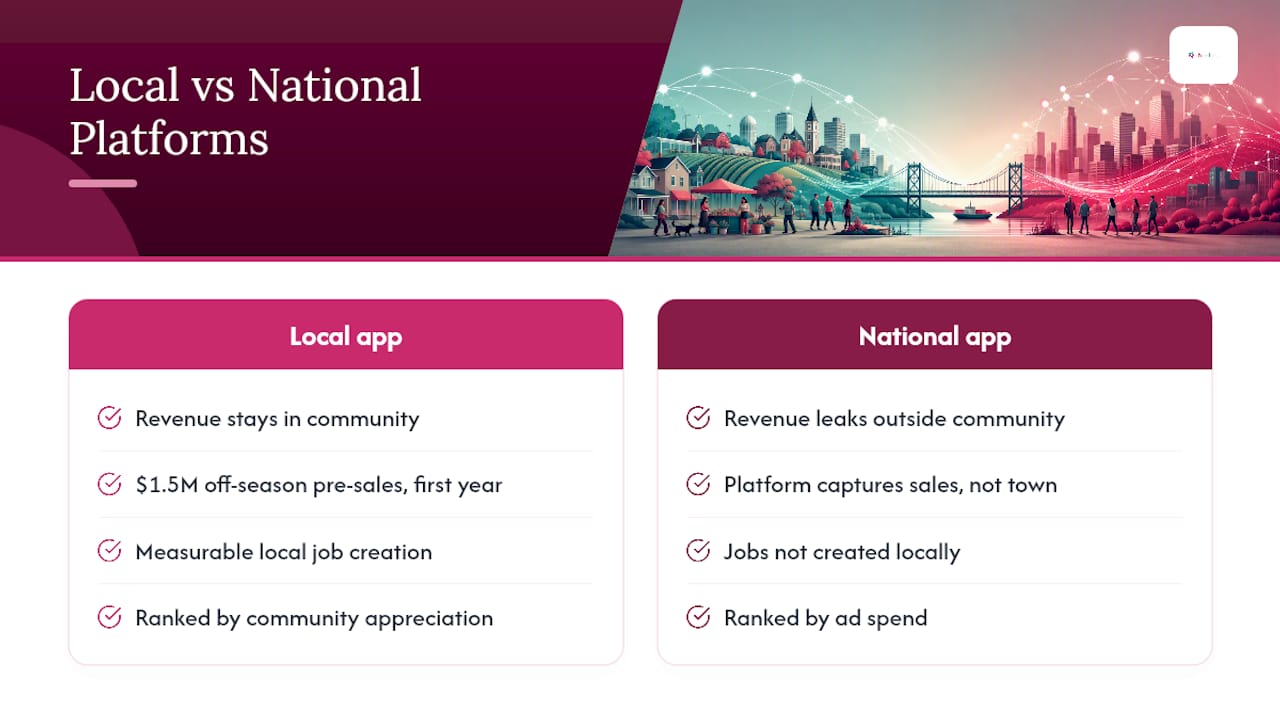
The clearest evidence comes from small towns that built their own private local networks instead of relying on outside platforms. One case study of Italian towns that launched sovereign local networks reported $1.5 million in off-season pre-sales in the first year alongside measurable local job creation, a direct result of keeping commerce, referrals, and discovery inside a community-owned system rather than handing that value to outside platforms.
theHive Windsor applies the same logic to Windsor-Essex: one platform, ranked by real community appreciation instead of ad spend, built specifically so local towns benefit from apps designed around their own community rather than a national app treating every town the same way. Author Randy has covered this shift in local business support for years, and the pattern holds: platforms that keep decision-making and ranking local outperform generic national apps on trust.
A Different Take on What "Consolidation" Really Fixes
Most articles about app consolidation focus on convenience. That's real, but it's not the interesting part. The interesting part is fairness. A ranking system driven by ad spend quietly favors whoever has the biggest marketing budget, not whoever actually treats customers best. A community-driven ranking flips that, and it only works if enough people show up to leave honest reviews and use the platform regularly. That's not a technical problem. It's a participation problem, and it's worth solving.
How theHive Windsor Puts This Into Practice
theHive Windsor is built specifically to solve the problems this article just walked through: one place for listings, events, referrals, and networking, ranked by community appreciation instead of paid ads. Compare that to juggling a directory app, a separate events calendar, and a social media page for referrals, and the time savings alone make the case.
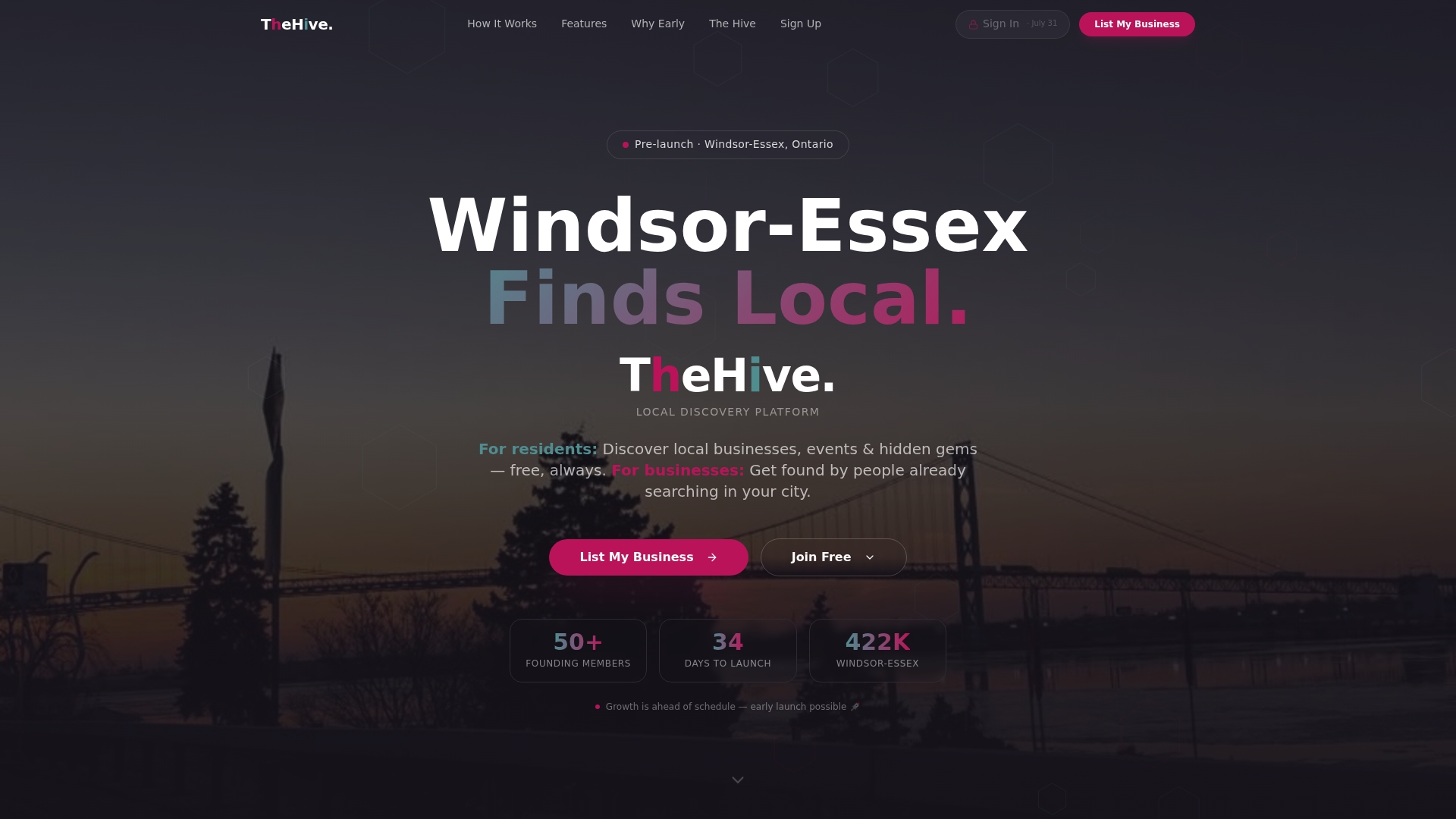
The platform maps directly onto the checklist covered above. Ad-free ranking means your visibility depends on service quality, not budget. Map and zone search lets residents filter by neighborhood. The events calendar keeps local happenings in one feed instead of five. Referral tools connect creators and freelancers with each other, and built-in lead analytics show businesses exactly where inquiries come from, solving the exact reconciliation problem that fragmented apps create.
Read theHive's platform mission to see how the ranking model works, then claim your business listing to start showing up where Windsor-Essex residents are already looking.
Frequently Asked Questions
Why do consolidated local apps matter more now than a few years ago? AI-driven search increasingly pulls from structured, well-maintained local listings, so a single consistent profile carries more weight for discovery in 2026 than five inconsistent ones spread across different apps.
Does a consolidated app cost more than using free social platforms? Not necessarily. Residents typically use these platforms for free, and businesses that already pay for social ads or multiple listing subscriptions often spend less consolidating into one platform with ad-free ranking.
How is ranking fair if there's no paid promotion? Ranking follows real community reviews and engagement instead of ad spend, so a small business with loyal customers can outrank a bigger competitor with a larger marketing budget.
What's the biggest risk of not consolidating? Lost leads. When listings, events, and messages live in separate apps, reconciling them manually means some inquiries simply never get answered.
Can freelancers and creators use these platforms, or are they just for storefronts? Yes. Freelancers and creators use the same referral tools, event listings, and profile visibility that storefront businesses use, just applied to gigs and portfolio work instead of walk-in customers.
Sources
- The case for a business directory listing in 2026
- Forget Facebook: These Italian Towns Built Their Own Social Networks—And The Results Are Staggering - DEV Community
- Event Apps Are Too Complicated And This is The Problem
- SME Growth Guide